NACS vs J1772 for Home Charging
Compare NACS and J1772 for U.S. home charging with a practical framework for identifying your inlet, evaluating adapters, and choosing equipment that fits your current and future vehicles.
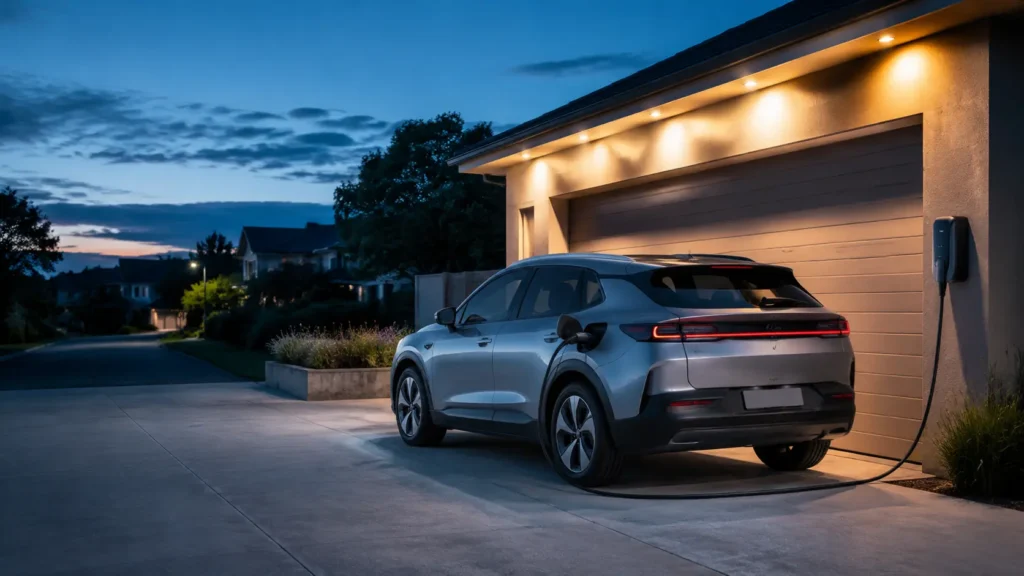
For U.S. home charging, the practical difference between NACS and J1772 is the physical connection between the charging equipment and the vehicle inlet. The right choice is usually the connector that fits your vehicle directly, provided the equipment also meets the vehicle manufacturer's requirements and the electrical installation is appropriate. If an adapter is needed, its qualification, direction of use, ratings, and manufacturer support must all be confirmed.
The decision becomes less obvious when a household expects to change vehicles, charge more than one electric vehicle, or buy during the transition toward SAE J3400, the standardized North American Charging System coupler commonly associated with the Tesla connector. Model year and exact vehicle configuration matter more than the badge on the hood. This guide provides a U.S.-specific process for checking the inlet, separating connector shape from charging performance, and preparing for a compatible purchase without assuming that every vehicle or adapter follows the same rules.
Connector images
Connector images are useful for initial orientation, especially when two charging-equipment listings use different terminology. An image should not be treated as final compatibility evidence. Regional product photos, early product renderings, and generic illustrations can show a connector that differs from the equipment actually supplied in the United States.
What to compare in a reference image
- The vehicle inlet: Inspect the actual charging inlet on the vehicle, not only the portable cable or public charging plug you have used before.
- The charging connector: Confirm that the plug attached to the home charging equipment is intended to mate with that inlet directly or through a supported adapter.
- Labels and documentation: Look for the connector terminology in the vehicle manual, charging instructions, and exact equipment documentation.
- The complete configuration: A similar-looking plug does not establish electrical compatibility, supported power, or approval for a particular vehicle.
SAE J1772 defines requirements for the North American conductive charging coupler, including the vehicle inlet and mating connector. SAE J3400 standardizes the North American Charging System coupler and covers AC single-phase and DC conductive power transfer. Those definitions help identify the interface, but neither standard name alone establishes how quickly a particular vehicle will charge.
When reviewing supplied editorial images, use them to understand the connector families and where the plug meets the vehicle. Do not use a pictured product, cable, wall unit, or regional configuration as proof of U.S. availability, certification, included accessories, or compatibility.
Model-year caveat
The vehicle's model year is a starting point, not a complete compatibility answer. Connector transitions can occur across production periods, trims, markets, or specific configurations. Two vehicles with the same model name may therefore require different home-charging connections.
Check the vehicle itself
Open the charge-port door and compare the installed inlet with the vehicle's documentation. If the manual covers multiple configurations, use the information tied to the vehicle identification details or ask the vehicle manufacturer to confirm the installed inlet. A sales listing, forum post, or broad model-year chart should not override the physical vehicle and manufacturer guidance.
Check what is included
A vehicle may be discussed as supporting a connector through a native inlet, an adapter, or a planned transition. These are not equivalent purchase situations. Before choosing charging equipment, determine whether any required adapter is included, optional, unavailable, or restricted to particular uses. Those details can change and must be verified for the exact vehicle.
Check used and imported vehicles carefully
For a used vehicle, confirm that the inlet, charging accessories, and documentation match the vehicle as delivered. Do not assume an adapter found in the cargo area is original, qualified, or appropriate. For a vehicle associated with another region, imagery and regional specifications do not establish that its charging arrangement matches a U.S. configuration.
Practical rule: Buy for the inlet and charging requirements of the exact vehicle in front of you, not for a connector transition announced for a different model year or configuration.
AC vs DC
Connector discussions often combine three separate questions: which plug fits, whether the charging session uses AC or DC power transfer, and how much charging power the vehicle and equipment can support. These questions should be evaluated separately.
| Question | What establishes the answer |
|---|---|
| Does the connector fit? | The exact vehicle inlet, charging connector, and any supported adapter |
| Is the connection intended for AC or DC transfer? | The applicable interface, vehicle design, charging equipment, and manufacturer instructions |
| What charging rate is available? | The vehicle, charging equipment, electrical supply, installation, and operating conditions |
| Is an adapter permitted? | Vehicle and charging-equipment guidance plus the adapter's documented purpose and qualifications |
SAE J3400 covers both AC single-phase and DC conductive power transfer. That broad scope does not mean every J3400-equipped product or vehicle supports every possible charging mode or rate. A connector standard identifies an interface and its requirements; it does not promise a product-specific charging result.
For home charging, first determine the charging method and capability supported by the vehicle. Then compare that requirement with the exact charging equipment and the proposed electrical installation. Connector fit cannot compensate for unsupported equipment, an inadequate circuit, or an installation that does not follow applicable instructions and electrical requirements.
Do not estimate charging time from the connector name alone. The relevant variables include the vehicle's supported charging capability, the equipment output, the available electrical supply, and conditions that can cause the vehicle or equipment to limit power. Product-specific values need current manufacturer documentation and an installation review.
Adapters
An adapter can solve a physical interface mismatch in some supported configurations, but it adds another component that must be evaluated. SAE publishes J3400/1 guidance addressing adapters between J3400 and J1772. The existence of adapter guidance does not approve every adapter or make every connection interchangeable.
Confirm the direction
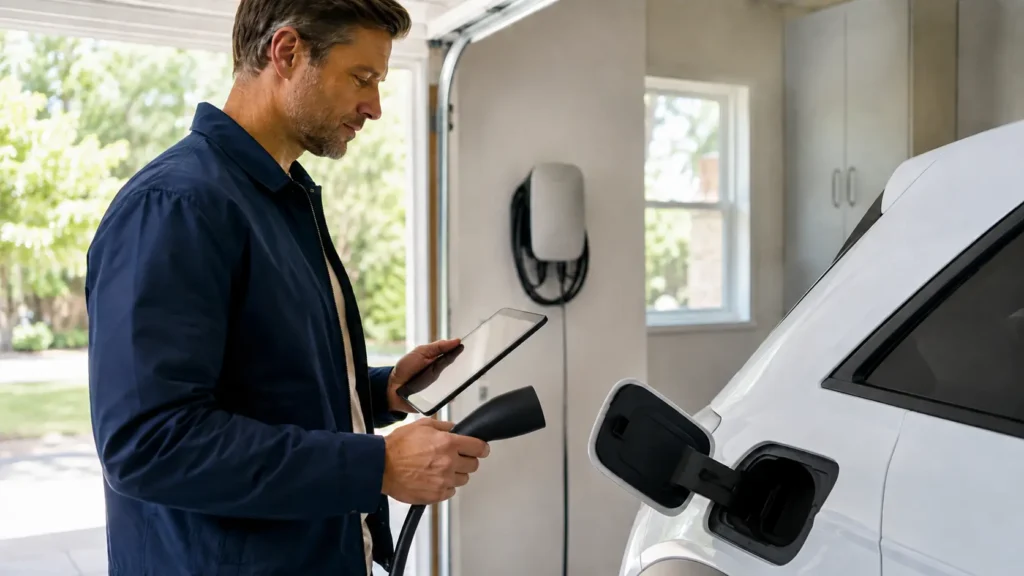
Adapter descriptions can look similar while serving different connection directions. Identify the vehicle inlet on one side and the charging-equipment connector on the other. Confirm that the adapter is expressly intended for that direction and charging use. Do not assume that an adapter works in reverse.
Confirm vehicle and equipment support
Review guidance from the vehicle manufacturer and the charging-equipment manufacturer. A mechanically fitting combination may still be unsupported. Check whether either manufacturer limits adapter use, requires a particular device, or distinguishes between charging situations.
Confirm the exact device
The adapter's markings, instructions, ratings, condition, and documented qualification matter. SAE J3400/1 provides guidance for adapter safety and OEM-qualified device designation, but a standard reference in a listing should be verified against the exact device and current documentation. Do not infer qualification from appearance or marketing language alone.
Avoid stacked or improvised connections
Do not create an adapter chain or modify a connector to force a fit. Extra interfaces can introduce unsupported combinations and make it harder to identify which component is responsible for a problem. Follow the instructions for the vehicle, charging equipment, and adapter as a complete system.
Inspect before use
Before each use, check for visible damage, contamination, looseness, or signs that a component has been stressed. Stop using a connection if it does not seat as instructed, will not latch as designed, becomes damaged, or produces a warning. Refer unresolved issues to the relevant manufacturer or a qualified electrical professional.

Future vehicle choice
A home charger can remain in service longer than one vehicle, so a future purchase deserves consideration. The goal is not to predict which connector will dominate every U.S. vehicle. The goal is to choose a manageable connection strategy for the vehicles the household realistically expects to charge.
If one current vehicle is the priority
A native connector that fits the current vehicle can reduce daily handling and eliminate dependence on an adapter. Verify the exact inlet, vehicle charging requirements, charging-equipment documentation, and installation requirements before purchase.
If a replacement vehicle is expected soon
Compare the confirmed inlet of the current vehicle with the documented inlet of the specific future vehicle. Do not rely solely on a brand-wide connector announcement. Confirm the model year, trim or configuration where relevant, expected delivery configuration, and whether compatibility depends on an adapter.
If the household has multiple EVs
List each vehicle separately. Record its installed inlet, supported home-charging method, manufacturer adapter guidance, and normal parking position. Then evaluate whether a direct-fit connector, a supported adapter strategy, or more than one charging connection provides the clearest routine.
A natively compatible J1772 or NACS home charger may be convenient for one household and inconvenient for another. Cable reach, parking arrangement, electrical capacity, equipment instructions, and adapter handling can matter as much as the connector family. These variables require site-specific and product-specific verification.
Questions to resolve before purchase
- Which connector is physically installed on each vehicle?
- Does each vehicle manufacturer support the proposed charging equipment and adapter arrangement?
- Is the exact product documented for the intended U.S. installation?
- What electrical work is required, and who will verify that work?
- Will the cable reach the inlet without tension or an improvised extension?
- Can every regular driver follow the same safe connection routine?
- What changes if the next vehicle uses the other connector family?
Compatibility tool
Use the following process as a compatibility worksheet before requesting a product recommendation or buying equipment. It is designed to produce a short, verifiable record rather than a guess based on the connector's appearance.
- Identify the exact vehicle. Record the manufacturer, model, model year, and configuration. For a used vehicle, also note any charging-related changes disclosed by the seller.
- Inspect the installed inlet. Compare the vehicle inlet with official vehicle documentation. Record whether the documentation identifies SAE J1772, SAE J3400 or NACS, or another arrangement that needs clarification.
- Define the charging use. State that the purchase is for home charging and identify the charging method supported by the vehicle. Keep public fast-charging assumptions separate from the home-charging decision.
- Review manufacturer guidance. Check the vehicle's current charging instructions for supported equipment, connector use, and adapter restrictions. If the documentation is ambiguous, obtain confirmation for the exact vehicle.
- Choose direct fit or adapter use. Prefer a direct connection when it meets the household's needs. If an adapter is proposed, record its exact direction, intended use, qualification information, and support from the relevant manufacturers.
- Verify the charging equipment. Confirm the exact model's connector, documented output, installation method, instructions, and suitability for the proposed environment. Do not transfer specifications from a similar model or regional image.
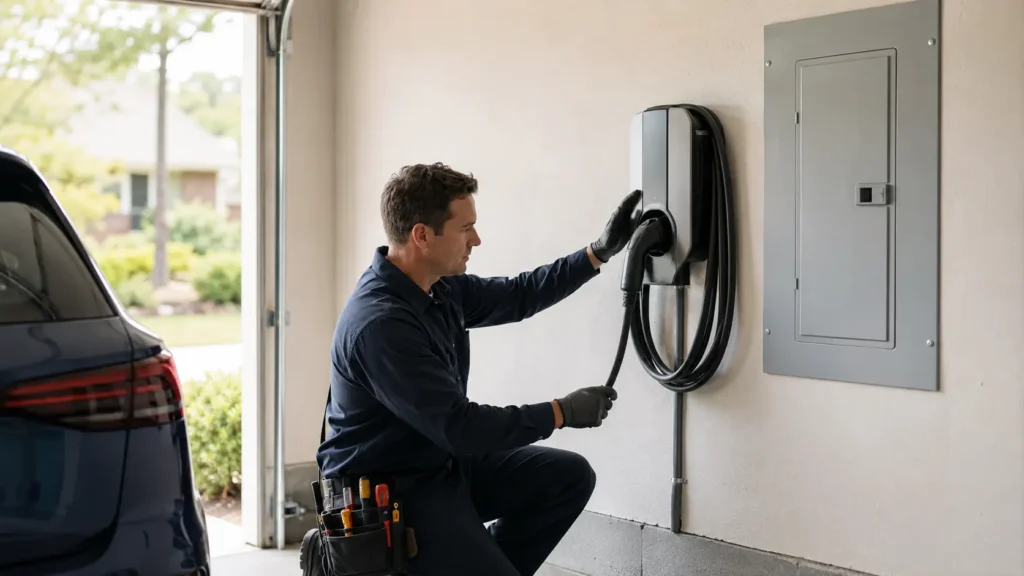
- Verify the electrical plan. Have the circuit, installation requirements, and site conditions evaluated under applicable instructions and electrical requirements. Connector choice alone does not determine whether an installation is suitable.
- Check the physical routine. Confirm parking position, inlet location, cable reach, connector storage, and whether an adapter can be handled without strain or exposure contrary to its instructions.
- Preserve the evidence. Keep the relevant vehicle, equipment, and adapter documentation with the purchase record. Recheck it if equipment, vehicles, or manufacturer guidance changes.
A useful compatibility result should name the exact vehicle, exact charging-equipment model, connector configuration, any adapter, and the unresolved items that still require confirmation. A result that says only “NACS compatible” or “J1772 compatible” is not detailed enough to support a purchase.
Frequently asked questions
Which EV connector do I have?
Inspect the inlet installed on the vehicle and confirm it against the documentation for the exact model year and configuration. Do not identify it solely from a brand name, a public charging session, or a generic photo.
Is J3400 the same as NACS?
SAE J3400 standardizes the North American Charging System coupler. Product listings may use J3400, NACS, or both terms, but compatibility still depends on the exact vehicle, equipment, charging use, and any required adapter.
Is the Tesla connector different from J1772?
The connector commonly described as the Tesla connector is associated with NACS and standardized through SAE J3400. SAE J1772 defines a different North American conductive charging-coupler interface. For a purchase, verify the formal connector description used by the vehicle and equipment manufacturers.
Does a NACS-to-J1772 adapter work with every vehicle?
No universal compatibility should be assumed. Confirm the adapter direction, intended charging use, exact device, vehicle support, charging-equipment support, and current manufacturer instructions.
Does choosing NACS or J1772 determine charging speed?
No. The connector standard alone does not establish a specific vehicle or product charging rate. Charging performance depends on the vehicle, equipment, electrical supply, installation, and operating conditions.
Should I choose a connector for my current EV or a future EV?
Start with safe, documented compatibility for the current vehicle. If a future vehicle is likely, compare both exact configurations and decide whether direct fit, a manufacturer-supported adapter, or a different equipment plan provides the simplest verified routine.
What should I confirm before buying a home charger?
Confirm the installed vehicle inlet, supported home-charging method, exact equipment model, connector, manufacturer guidance, adapter requirements, electrical installation needs, cable reach, and suitability for the installation environment. Treat availability, pricing, certification, warranty, and included accessories as separate product-specific facts that require current verification.
Sources and review notes
Evidence basis: Official-source research. Sources checked: 2026-08-16.