Smart EV Charger Features: What Is Actually Useful?
Learn which smart EV charger features solve practical problems, from scheduled charging and utility-rate timing to load management, access control, privacy, and offline operation.
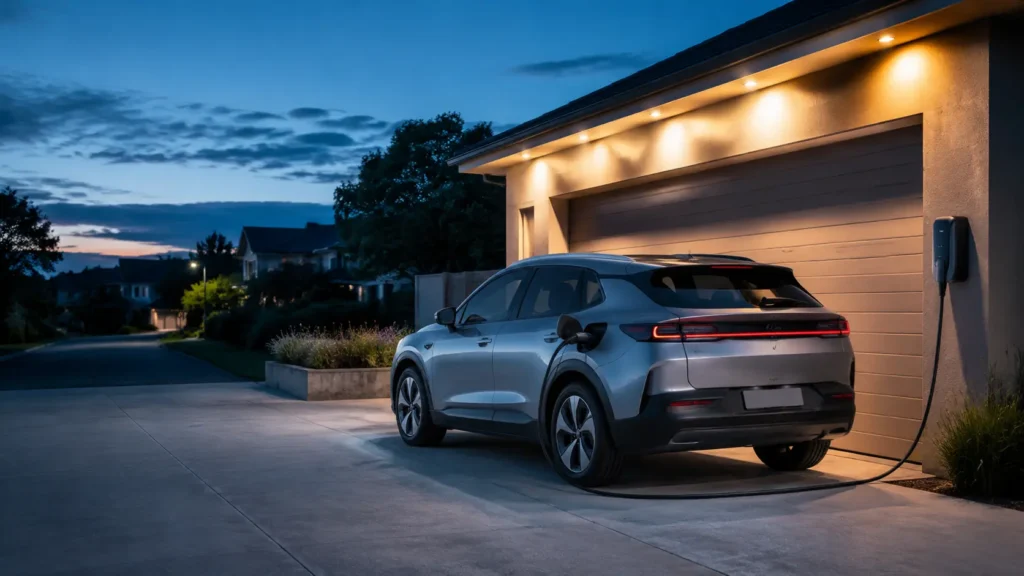
A smart EV charger is most useful when its connected features solve a specific household problem. Scheduling can help align charging with lower-cost utility periods, load management may help coordinate electrical demand, access controls can restrict unauthorized use, and energy data can make charging activity easier to understand. A long feature list is less important than reliable operation, electrical suitability, vehicle compatibility, and independently verified safety certification.
For U.S. buyers, the practical approach is to identify the task the charger must perform, confirm that the feature works under the expected conditions, and verify every electrical and compatibility requirement separately. The U.S. Department of Energy describes advanced Level 2 charger capabilities that can include data collection, user interfaces, enhanced displays, charging timers, communications, and keypads. ENERGY STAR notes that some connected chargers provide remote power monitoring or control and may support utility programs where those programs are available. Those capabilities are possibilities, not guarantees for every model.
Scheduling
Scheduling is often the clearest reason to choose a smart charger. It lets a driver define when charging should start, stop, or remain paused. This can reduce the need to plug in at a precise time and may help a household follow a utility rate plan. Scheduled EV charging is valuable only when the charger, vehicle, and utility rules work together predictably.
Use this process to evaluate scheduling
- Identify the charging window. Determine when the vehicle is normally parked, when it must be ready, and whether the utility assigns different prices to different hours.
- Choose one scheduling authority. Decide whether the vehicle or the charger will control timing. Two active schedules can conflict, so the operating instructions for both products should explain the intended setup.
- Check exceptions. Confirm how the system handles an immediate charging need, a late arrival, a changed departure time, or a temporary schedule override.
- Test recovery behavior. Verify what happens after a power interruption, internet outage, software update, or clock change. A schedule that silently disappears is not dependable.
- Confirm the result. Use the vehicle, charger interface, or available energy record to check that charging occurred during the intended period.
A useful scheduler should be understandable without repeated adjustment. Look for clear start and stop controls, a visible indication of the active schedule, and an easy temporary override. If charging happens at the same time every night and the vehicle already handles that task reliably, charger-based scheduling may provide little additional value.
TOU
TOU means time of use. Under a time-of-use electricity plan, the price of electricity can vary by period. A smart charger may help place charging in a preferred period, but it does not determine whether a rate plan will save money. The answer depends on the utility's current rules, the household's total electricity use, charging frequency, and the ability to shift demand.
| Question | Why it matters | What to verify |
|---|---|---|
| Does the utility use TOU pricing? | Scheduling around rates has no rate benefit when electricity costs the same at all relevant times. | Current plan eligibility, time periods, seasonal rules, and applicable charges |
| Can charging fit in the preferred window? | A low-cost period is useful only if it provides enough time for the driver's normal charging need. | Typical arrival time, departure time, and charging requirement |
| Who stores the rate schedule? | Automatic rate information can become outdated or may not represent every utility plan. | Whether times are entered manually, supplied by an app, or coordinated through a utility program |
| Can the schedule be overridden? | Drivers occasionally need charging outside the normal window. | Immediate-charge controls and whether the normal schedule resumes afterward |
Do not assume that a charger labeled utility-ready will work with a particular program. ENERGY STAR indicates that some connected chargers may support utility programs where available, but program participation and device eligibility must be confirmed with the utility and charger provider. Check the current terms before purchase and again before enrollment because programs can change.
Energy data can support a TOU decision by showing when charging occurred. It should not be treated as a utility bill unless the provider explicitly documents that use. Compare charger records with the information supplied by the utility when evaluating costs.
load management
Load management coordinates charging demand with an electrical limit or with other participating equipment. It can be relevant when a household wants charging power to respond to changing electrical conditions, or when multiple charging connections need to share capacity. The exact capability depends on the equipment, sensors, configuration, and installation design.
- Define the constraint. Establish whether the concern is the service, a panel, a circuit, simultaneous household demand, or more than one charging station.
- Identify what is being controlled. Some approaches may adjust one charger, while others coordinate multiple devices. Do not infer system-wide control from a general smart label.
- Verify required hardware. Ask whether the function needs separate monitoring equipment, compatible accessories, network access, a subscription, or specific installation work.
- Confirm failure behavior. Determine what the charger does when a sensor, controller, network, or associated service becomes unavailable.
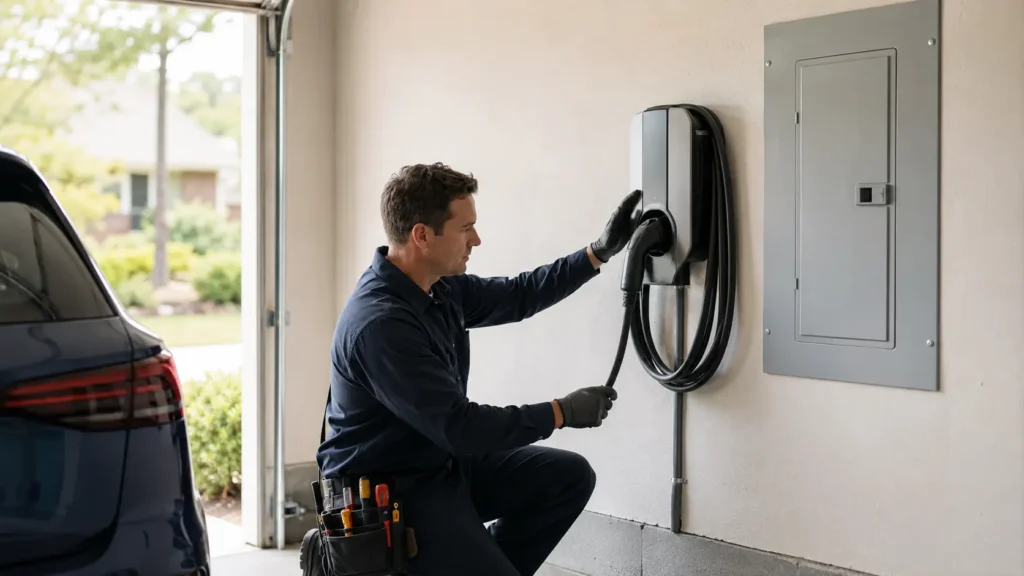
- Obtain an electrical review. Smart controls do not establish circuit suitability or replace an evaluation of the planned installation under applicable requirements.
Load management should be selected as part of the electrical design, not as a substitute for it. Before purchase, confirm the charger's electrical requirements, the installation method, the intended charging output, and whether the proposed control arrangement is supported by all involved equipment. Product compatibility and safety certification remain separate checks.
access control
Access control determines who can initiate or continue charging. It can be useful for a charger in a shared driveway, multifamily parking area, workplace, or other location where the connector is reachable by people outside the driver's household.
Simple local control
A physical control, keypad, or local authorization method may be easier to understand and less dependent on an online account. The U.S. Department of Energy includes keypads among the possible capabilities of advanced chargers. Confirm how credentials are changed, whether access can be restored after a lockout, and whether local controls remain available without internet service.
App or account control
An EV charger app may let an account holder authorize charging, pause a session, or manage users remotely when the product supports those functions. Before relying on app control, check whether every regular driver needs a separate account, whether temporary access is possible, and what happens if a phone, cloud service, or home network is unavailable.
When access control adds little
For a charger inside a secured private garage, access restrictions may solve no meaningful problem. Added authentication can also create friction for household members or guests. Match the control method to the actual exposure of the parking location instead of choosing the most elaborate option.
connectivity
Connectivity enables communication between a charger and another device or service. A WiFi EV charger may support remote status, controls, notifications, software updates, or energy records, but the exact functions must be confirmed for the individual product. A connectivity logo alone does not establish what the app can do or whether a cloud account is required.
Start by checking the network conditions at the parking location. A garage can have weaker wireless coverage than the living area, and network requirements may differ among products. Verify supported connection methods, setup requirements, account requirements, and whether the charger can reconnect without manual intervention after an outage.
Remote control
ENERGY STAR notes that some connected chargers can provide remote power monitoring and control. For a buyer, the important details are the available commands, the delay between command and response, and the visibility of the charger's actual state. Confirm whether remote control includes starting, stopping, scheduling, notifications, or only status viewing.
Energy data
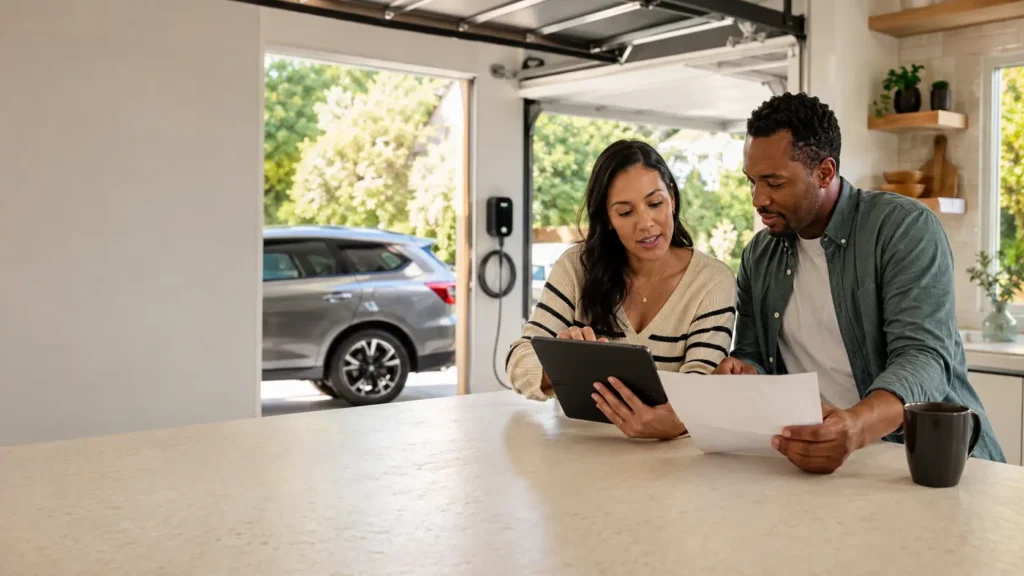
An energy monitoring EV charger can help a household review charging activity, identify timing patterns, or separate vehicle charging from broader household use. Ask whether the data is shown by session, day, month, vehicle, or user; whether it can be exported; how long it remains available; and what happens to historical records if the account closes.
Charger data may not equal the energy reported by a vehicle or utility meter because systems can measure at different points or use different reporting methods. Treat the information as a management tool unless its intended measurement use and accuracy are explicitly documented.
privacy
A connected charger can create records related to an account, device, charging sessions, and network activity. The relevant privacy question is not simply whether data exists, but what is collected, why it is needed, where it is processed, how long it is retained, and which controls are available to the user.
- Account scope: Check which personal details are required to activate and operate the charger.
- Charging records: Determine whether timestamps, energy information, device identifiers, location-related information, or user activity are stored.
- Data sharing: Review the provider's current explanation of service providers, utility integrations, optional programs, and other disclosures.
- User controls: Look for ways to export records, remove users, change permissions, close an account, and request deletion where applicable.
- Security maintenance: Confirm how software updates are delivered and how long the provider says the connected functions will be supported.
Privacy policies and service terms can change, so review the current documents associated with the exact product and app before purchase. Do not infer one charger's practices from another model or from a regional storefront. If a feature requires more data access than the household is comfortable providing, determine whether the charger can perform its essential charging function without that feature.
offline operation
Offline operation is a core reliability question. Home charging should not become unusable merely because an optional connected service is interrupted, but actual behavior varies by product and configuration. Buyers should obtain a clear answer rather than assuming that every smart charger works the same way.
- Basic charging: Confirm whether plugging in can initiate charging when internet service is unavailable.
- Stored schedules: Determine whether schedules are saved locally, depend on the cloud, or require the app to communicate with the charger.
- Local controls: Check whether buttons, keypads, or nearby device connections continue to work offline.
- Access rules: Verify whether authorized users can charge during an account, network, or service outage.
- Data handling: Ask whether session records are stored locally and synchronized later, or whether data is lost.
- Power recovery: Confirm whether the charger restores its prior settings and operating state after power returns.
The right fallback depends on the setting. A private garage may prioritize immediate charging, while shared parking may need access restrictions to remain active. Include these expected behaviors in the purchase checklist and retain the documented setup and recovery instructions.
support
Smart features depend on more than hardware. They may also depend on an app, account system, cloud service, device software, utility integration, and compatible phone operating system. Support quality therefore affects whether the charger's connected functions remain useful over time.
Questions to resolve before purchase
- Who supports charger setup, app access, network troubleshooting, and utility-program enrollment?
- Which phone platforms, network conditions, accounts, and permissions are required?
- Are connected functions included, optional, subscription-based, or subject to separate terms?
- How are software and security updates delivered, and is a stated support period available?
- Can essential settings be viewed or changed locally if an app is discontinued or temporarily unavailable?
- What records should the owner retain for installation, configuration, account recovery, and service requests?
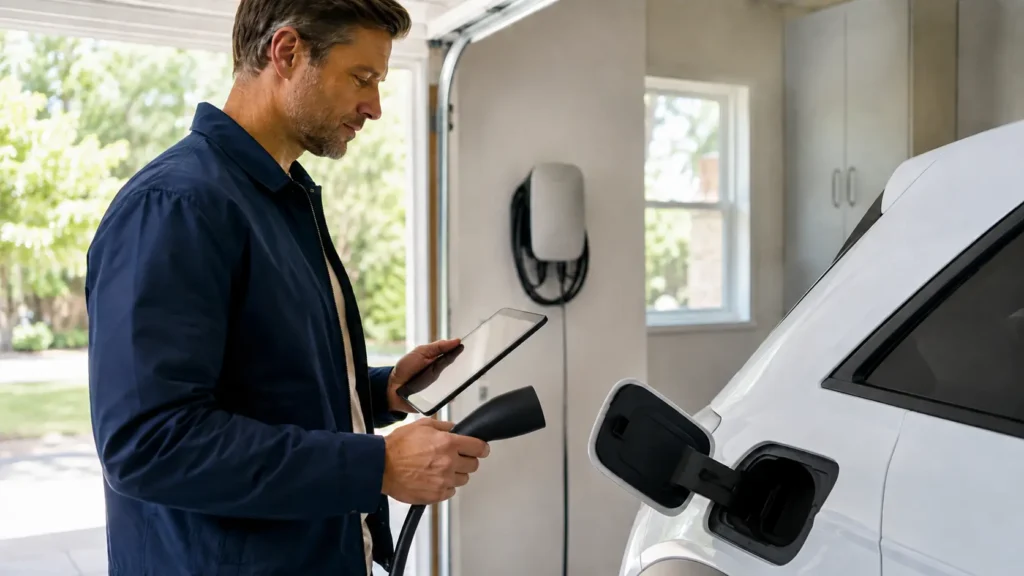
Commercial details such as current price, stock, warranty, shipping, certification, and U.S. availability require product-specific verification. The same applies to vehicle compatibility, electrical suitability, utility-program eligibility, and installer requirements. None of those points is established merely because a charger offers an app or appears in an editorial image.
A concise buying decision can be made in three passes: first verify the charger and installation requirements; then choose only the smart functions that address a real scheduling, monitoring, access, or rate need; finally confirm how essential charging behaves when the internet, app, or associated service is unavailable. This keeps convenience features in their proper role without allowing them to overshadow the charging system's fundamental requirements.
Frequently asked questions
Is a smart EV charger necessary for home charging?
No universal requirement makes connected features necessary for every home. They are most useful when the household needs charger-based scheduling, remote status, energy records, access control, load coordination, or possible participation in a supported utility program. If the vehicle already handles scheduling and the charger is in a secure location, a simpler configuration may meet the same practical need.
Should scheduling be controlled by the car or the charger?
Either may be appropriate when the equipment supports it, but using two independent schedules can create confusion. Choose one primary scheduling authority, follow the applicable operating instructions, and test the complete plug-in and departure routine. Confirm that an override is available for unexpected trips.
Will a smart charger automatically lower my electricity bill?
Not necessarily. Potential savings depend on the household's current utility plan, eligible charging periods, total electricity use, and ability to shift charging. Verify the utility's current rates and program rules before estimating a benefit. A charger can help execute a schedule, but it does not create a favorable rate.
Does Wi-Fi determine whether the charger is compatible with my vehicle?
No. Connectivity is separate from vehicle compatibility, electrical suitability, installation requirements, and safety certification. Verify each of those requirements independently for the exact charger, vehicle, and installation.
What is the most important smart feature?
The most important feature is the one that solves a demonstrated problem reliably. For many drivers that may be scheduling; for shared parking it may be access control; for a constrained electrical design it may be supported load management. Offline behavior and continued support should be evaluated alongside any headline feature.
Can charger energy data replace a utility bill?
Do not assume so. Charger records can be useful for reviewing sessions and timing, but systems may measure or report energy differently. Use utility-provided information for billing and confirm any specialized measurement claim with current documentation for the exact product.
Sources and review notes
Evidence basis: Official-source research. Sources checked: 2026-08-16.