EV Charger Electrician and Permit Checklist
Learn about ev charger installation checklist, U.S. compatibility, setup, safety and the checks to make before choosing EV charging equipment.
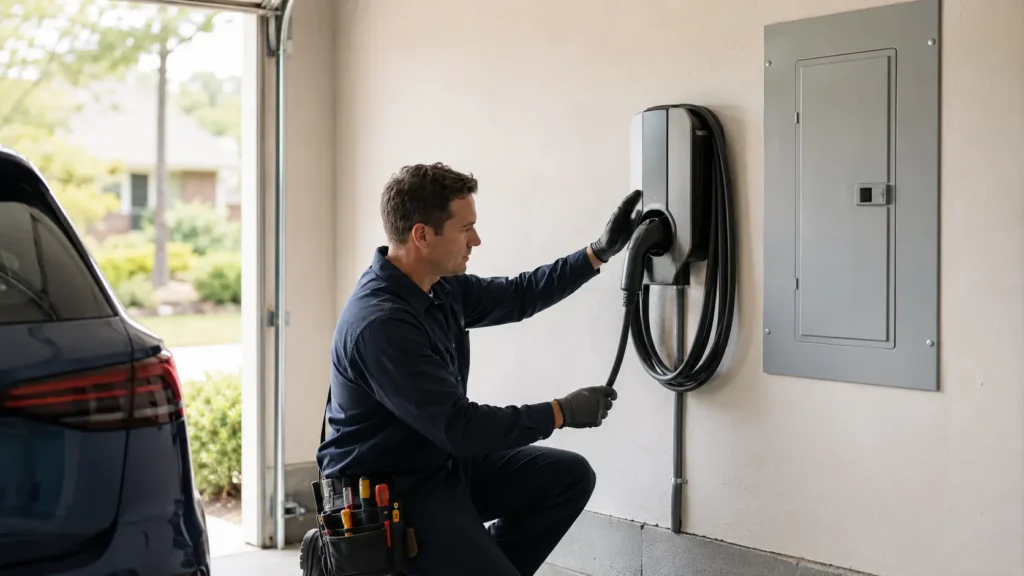
Installing a Level 2 electric vehicle charging system at home requires careful planning across electrical capacity, wiring methods, municipal permitting, and equipment commissioning. Because an EV charger acts as a continuous electrical load that draws maximum amperage for hours at a time, standard outlets and DIY approaches create serious safety hazards.
This guide walks you through every technical checkpoint required for a safe, code-compliant installation. You will learn how to evaluate your main service panel, size conductors properly, navigate local permit and inspection rules, and vet a qualified electrical contractor before signing a work agreement.
Scope
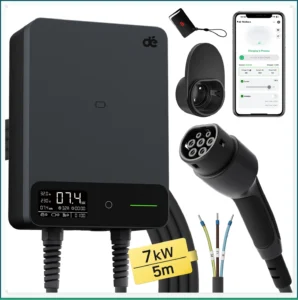
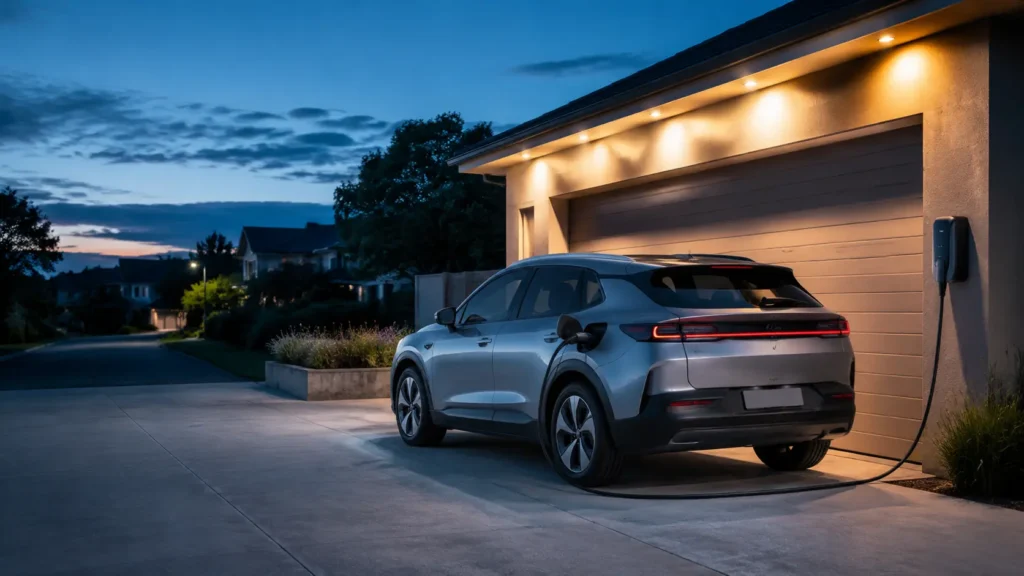
An EV charger installation checklist maps the complete path from your utility transformer to the final wall connector. Getting this right requires defining the physical boundaries of the project before any hardware is unboxed. You need to know exactly where the vehicle parks, how the cable will route through or around structures, and whether your parking area requires bollards, surface protection, or weather-rated enclosures.
Defining the scope also means auditing your current daily driving habits against equipment capabilities. A plug-in hybrid or a commuter car with a modest battery pack places vastly different demands on electrical infrastructure than a heavy-duty electric pickup truck charging overnight at maximum amperage. Documenting these parameters upfront prevents costly mid-project changes and ensures your chosen hardware matches your actual home charging needs.
load calculation
A formal NEC demand load calculation determines whether your home electrical service can support continuous EV charging without overloading the main breaker. Electric vehicle supply equipment operates as a continuous load, meaning it draws maximum current for three hours or more. Under electrical codes, continuous loads must be calculated at 125 percent of their nameplate rating.
If your home service panel is rated at 100 amps or 125 amps, adding a 50-amp or 60-amp Level 2 charger often exceeds the total allowable capacity of the existing service. An electrician must perform a standard load calculation using your home square footage, heating and cooling loads, electric water heater, range, and other major appliances. If the calculation reveals an deficit, your options include upgrading your main electrical service to 200 amps or installing an automated energy management system that throttles EV charging when household demand peaks.
panel/circuit
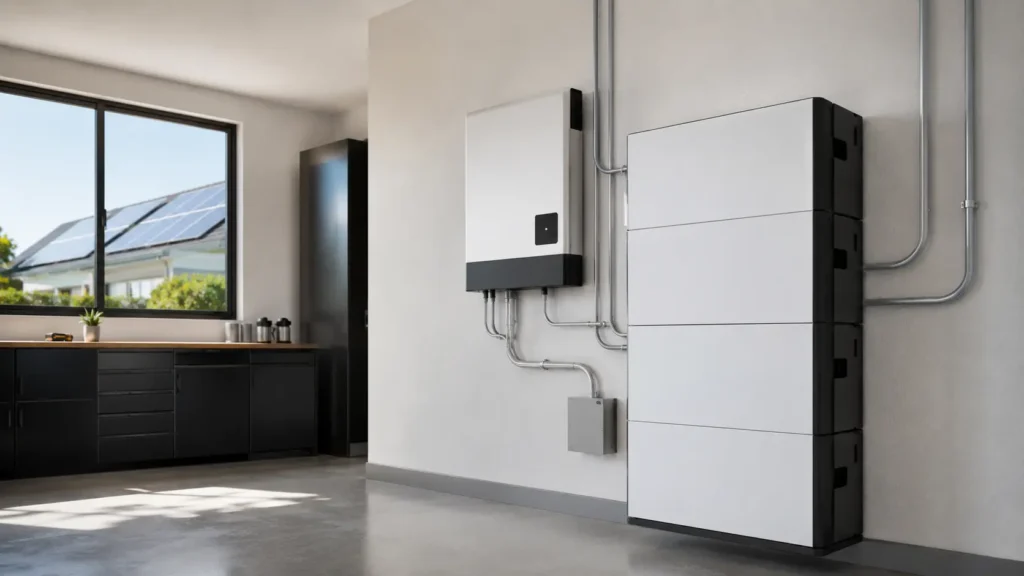
Your main service panel or subpanel must have physical space and structural capacity to accept a dedicated two-pole breaker. Level 2 chargers operate on 240 volts, requiring two dedicated hot bus spaces in your breaker box. You cannot share an existing circuit or tap into a nearby dryer line without violating safety standards and building codes.
Evaluating the panel involves checking for physical slot availability, busbar condition, and compatibility with the charger manufacturer requirements. Older breaker panels, particularly certain legacy brands known for thermal tripping failures or busbar degradation, may require replacement before an electrician can safely tap into them. If your main panel is located on the opposite side of the house from your garage, the electrician will likely need to install a dedicated subpanel closer to the parking stall to manage the long branch circuit safely.
Conductor
Selecting the right wire gauge and conductor material is critical for handling the continuous current draw of a Level 2 charging system safely over distance. Because an EV charger pulls maximum amperage for hours at a time, undersized wiring will generate excessive heat, degrade insulation, and eventually create a fire hazard. Your electrician must size conductors based on the nameplate ampacity of the charger, the distance from the service panel to the charging location, and any temperature correction factors required by the National Electrical Code.
Copper wiring is the industry standard and preferred choice for residential branch circuits, offering superior conductivity and mechanical stability compared to aluminum. While aluminum wire can be used for larger feeder runs if properly terminated with antioxidant compound and rated lugs, small gauge branch circuits typically rely on copper. The wiring must also account for whether the charger is hardwired or plugged into a NEMA receptacle. Hardwired installations eliminate a point of failure at the plug interface, which is why many residential installers recommend hardwiring units rated above 40 amps.
GFCI/local rules
Ground-fault circuit interrupter protection requirements for electric vehicle supply equipment have evolved significantly in recent code cycles to address outdoor shock hazards. When you install a 240-volt NEMA receptacle in a garage or outdoors, the electrical code generally requires GFCI protection at the breaker or receptacle level. This protection prevents severe shock by cutting power instantly if current leaks outside the intended circuit path. However, pairing a GFCI breaker with certain hardwired chargers that feature internal self-monitoring and leakage protection can sometimes cause nuisance tripping if the manufacturer instructions conflict with local interpretations.
Because municipal building departments adopt different code editions and enforce local amendments, your installation plan must satisfy regional jurisdiction rules rather than relying solely on national standards. Some cities require specific physical bollards or protective barriers if the charger is mounted in a shared driveway or commercial-facing residential parking space. Others enforce strict conduit schedules for detached garages or underground runs. Reviewing your local authority having jurisdiction guidelines before purchasing hardware prevents costly rework and inspection failures.
permits
Securing the correct electrical permit before installation begins is a legal requirement in nearly every U.S. jurisdiction, not a bureaucratic formality. Your local building department relies on permit applications to verify that the proposed EV charger installation complies with current electrical and fire safety codes. Bypassing this step can invalidate homeowners insurance policies if an electrical fire occurs, and it often creates legal complications when selling a property.
A complete permit submission typically requires a filled application form, a fee paid to the municipality or county, and a detailed plan or single-line diagram. This drawing should show the main service panel rating, the proposed breaker size, the conduit path, wire gauge, and the specific make and model of the charging equipment. Some jurisdictions also require load calculation worksheets to prove your home service can support the added demand.
Once the application is approved, your electrician or local authority will schedule an inspection. Most municipalities require a rough inspection if walls are open and wiring is exposed, followed by a final inspection after the charger is mounted, wired, and energized. Plan your project timeline around these review windows, because inspectors may take several days or weeks to dispatch an agent.
commissioning
Physical installation and wiring represent only the first half of a proper setup. Commissioning the equipment ensures it communicates correctly with your vehicle, limits its current draw to safe parameters, and operates without tripping protective devices. Skipping commissioning steps can lead to erratic charging sessions or hardware faults.
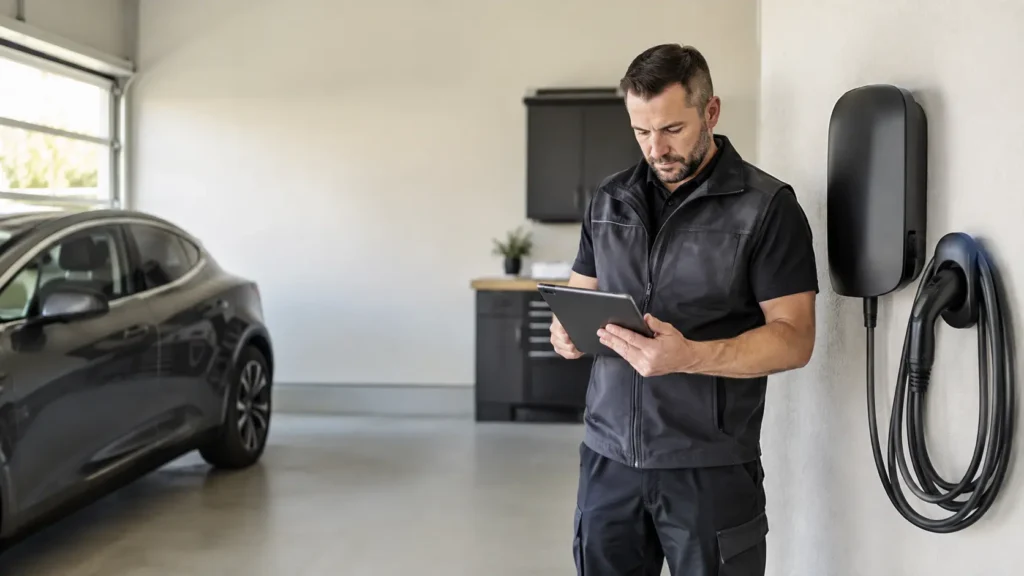
Modern Level 2 units often require manual configuration using internal rotary switches, dip switches, or a companion smartphone app via Bluetooth or Wi-Fi. During this phase, the installer must match the charger's maximum output amperage to the installed breaker size and conductor capacity. For example, a circuit wired with 6-gauge copper on a 60-amp breaker must have the charger software or physical jumpers set to a maximum output of 48 amps, adhering to the NEC eighty percent rule for continuous loads.
After adjusting the internal amperage limits, test the unit by initiating a charging session while monitoring the circuit breaker and terminal connections for any abnormal heat or voltage drop. Smart chargers may also require firmware updates and network provisioning during this window. Verify that the unit connects to your home network if you plan to track energy usage, schedule off-peak charging times, or manage access permissions through an app.
documentation
Keeping thorough installation records protects your warranty coverage and simplifies future property sales or insurance reviews. You should collect and store every piece of paperwork generated during the project. A complete paper trail proves that the work met professional standards at the time of installation.
For further reference, see NHTSA electric and hybrid vehicle safety guidance.
Request itemized invoices from your electrician that detail the exact wire gauge, conduit type, breaker model, and hardware specifications used on the job. Combine these invoices with the final signed permit card, inspection approval sign-offs, and manufacturer equipment manuals. If the electrician adjusted internal dip switches or software settings to match your service limits, write down those configured amperage levels alongside the equipment serial number.
questions
Preparing specific questions for your contractor helps surface hidden costs, scheduling delays, or code compliance issues before work begins. Ask prospective electricians whether they handle the local permitting process directly or if you must submit the paperwork yourself. Clarify who covers the cost of corrections if the municipal inspector requires changes after the initial rough-in.
You should also inquire about warranty support and service response times if the unit trips or fails. Ask how the contractor sizes conductors for temperature correction factors in your specific garage environment and whether they perform a formal load calculation before pulling the permit. Clear answers to these practical details prevent misunderstandings and ensure your charging setup operates safely for years.
Frequently asked questions
Review your home service panel capacity and consult a licensed electrician before purchasing any charging hardware. Ensuring that your installation meets local National Electrical Code standards and municipal permit requirements protects your home, preserves equipment warranties, and guarantees safe daily operation.
What matters most when evaluating ev charger installation checklist?
Ensuring that your home electrical service has sufficient spare capacity to handle a continuous Level 2 charging load is the most critical factor. A proper load calculation prevents overloads on your main service panel and determines whether a service upgrade or automated power manager is necessary.
What can change the answer for ev charger installation checklist?
Local municipal amendments, utility interconnection rules, and the physical distance between your main service panel and your parking location can significantly alter installation costs and technical requirements. Code editions and local authority having jurisdiction rules always override general guidelines.
What should you verify before making a decision about ev charger installation checklist?
Always verify that your electrician pulls the required electrical permits, performs a formal load calculation, sizes conductors and breakers according to continuous duty rules, and schedules the mandatory municipal inspections upon completion.