Level 2 EV Chargers for Faster Home Charging
Adding a level 2 ev charger to your garage is the most effective way to cut your daily vehicle recharge times down from overnight hours to a simple top-off. This guide helps you evaluate essential electrical specifications, compare plug-in and hardwired setups, check your home service panel capacity, and match the correct connector type to your vehicle before making a final purchase decision.
Plug-in vs hardwired
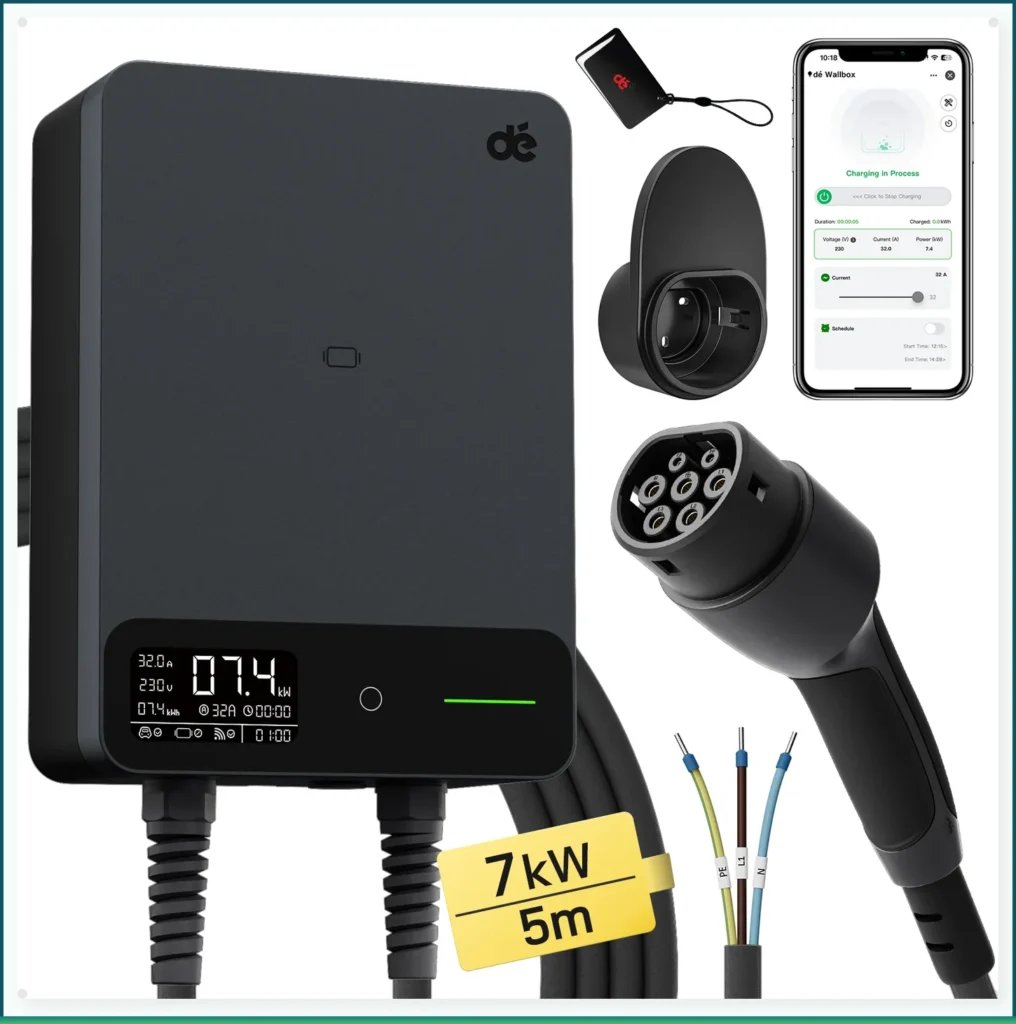
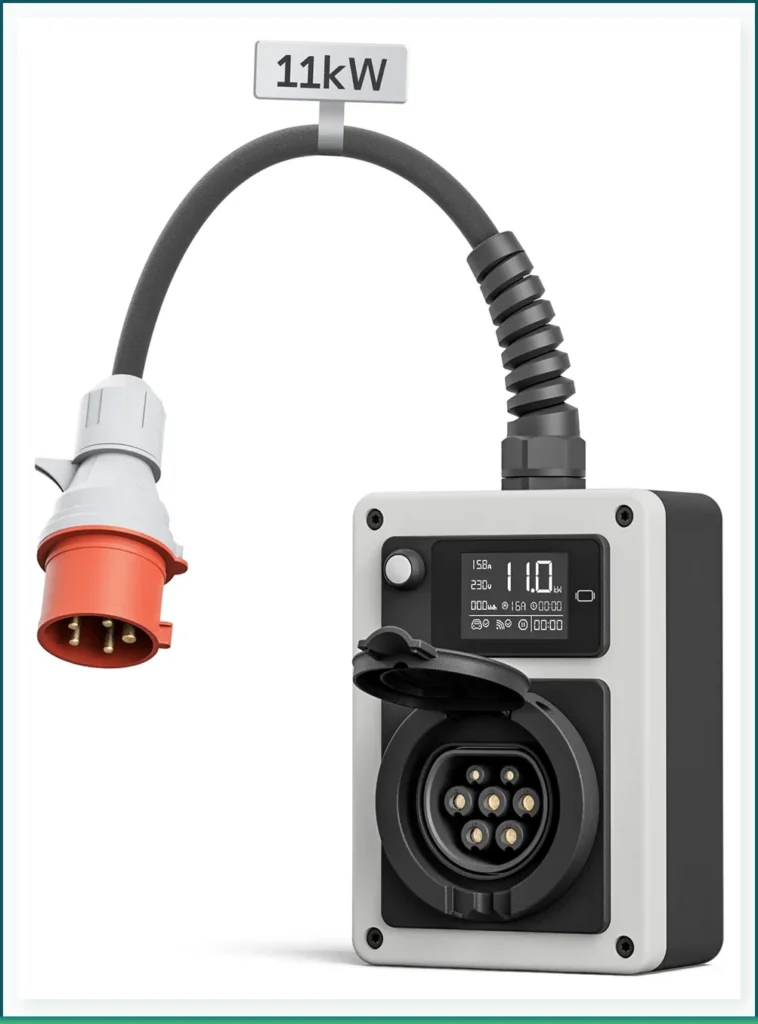
Choosing between a plug-in unit and a hardwired installation for your home level 2 charger comes down to flexibility versus continuous output capacity. A plug-in charger connects to an existing 240v outlet, usually a NEMA 14-50 receptacle, which means you can unplug the unit and take it with you if you move or switch vehicles. Hardwired units are permanently wired directly into your home electrical circuit by a qualified electrician, eliminating the need for a high-amperage outlet and its associated plug connection.
Safety and wear considerations also separate these two configurations. Outdoor plug-in installations require a heavy-duty weather-rated enclosure and a durable industrial-grade receptacle to handle constant thermal expansion during high-draw charging sessions. Hardwired connections reduce potential failure points by removing the plug and socket interface entirely, making them a preferred option for high-amperage continuous loads mounted in exposed outdoor locations.
amperage filter
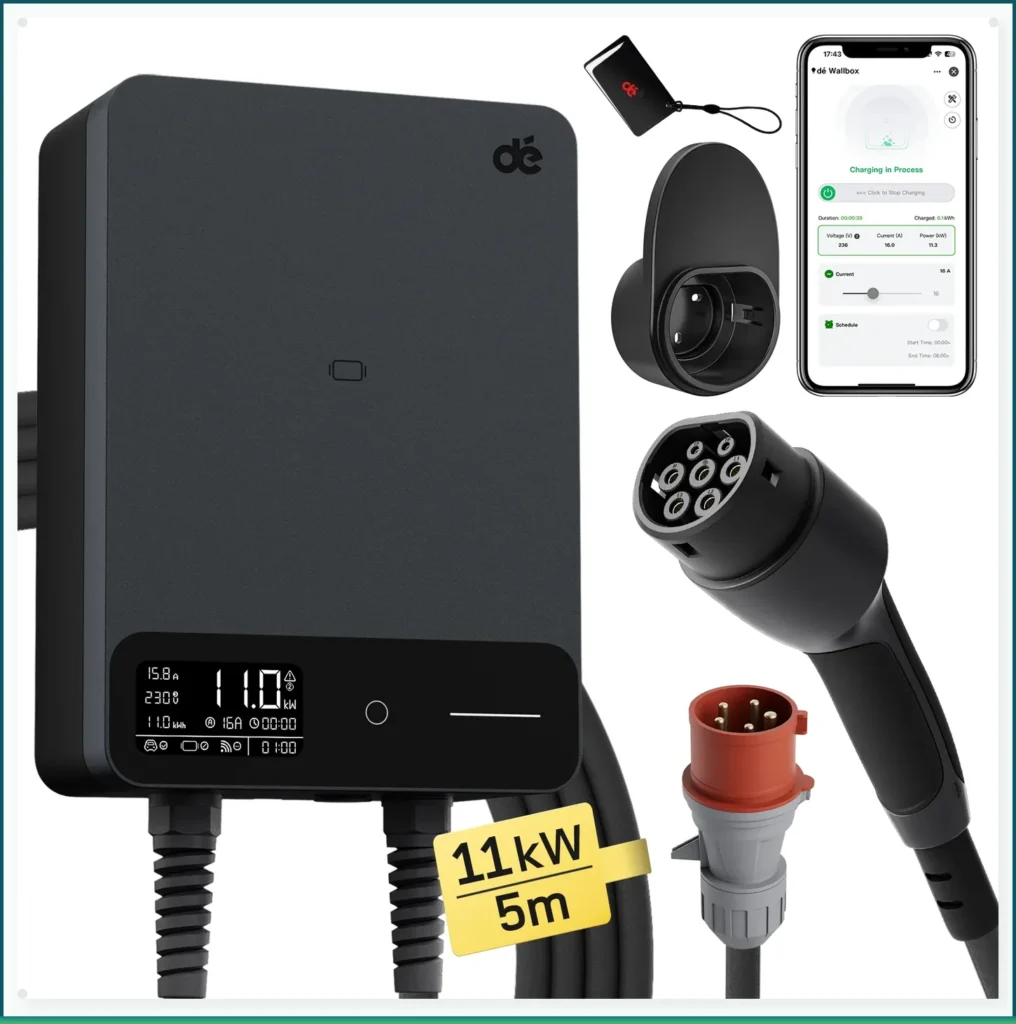
Selecting the right amperage for a 240v ev charger requires balancing your vehicle maximum acceptance rate against your home electrical panel capacity. Common home units operate at 40 amps or 48 amps, each delivering distinct charging speeds. A 40 amp ev charger requires a dedicated 50-amp breaker and delivers roughly 9.6 kilowatts of power, comfortably replenishing a typical battery electric vehicle overnight.
Stepping up to a 48 amp ev charger demands a dedicated 60-amp circuit and delivers up to 11.5 kilowatts. While faster, a 48-amp unit must be hardwired under the National Electrical Code because standard residential 240v plug-in receptacles max out at 50 amps, limiting continuous plug-in loads to 40 amps. Match your choice to your car onboard charger limit to avoid paying for electrical capacity your vehicle cannot actually use.
panel check
Before you select a home level 2 charger, you must look inside your home electrical panel to see if you actually have the spare capacity to support it. A 240v ev charger represents a continuous heavy load, meaning your electrical service box needs physical breaker slots and enough total amperage headroom to handle the extra demand without tripping your main breaker.
Check your main breaker label to find your total service rating, which is typically 100 amps, 150 amps, or 200 amps in modern American homes. If your home runs on an older 100-amp service while powering central air conditioning, an electric range, and a clothes dryer, adding a dedicated 50-amp or 60-amp circuit for a 40 amp ev charger or 48 amp ev charger will likely overload the panel. In these scenarios, you will need a licensed electrician to perform a load calculation, or you might have to look into a smart load-management device that temporarily throttles vehicle charging when your home uses too much power elsewhere.
connector filter
Every modern electric vehicle sold in North America relies on one of two primary charging connector standards, making it vital to match your neme 14-50 ev charger or hardwired unit to your specific vehicle port. The J1772 connector serves as the universal standard for almost all non-Tesla battery electric vehicles and plug-in hybrids, while Tesla vehicles utilize their own proprietary connector design unless plugged into an adapter.
If you drive a Tesla, you can plug directly into any home level 2 charger equipped with a Tesla wall connector, or you can use a high-quality J1772 adapter if your chosen unit features the standard nozzle. Conversely, if you drive a Ford, Chevrolet, Hyundai, or Rivian, you need a J1772 cable interface. Pay close attention to cable length and holster placement as well, since parking orientation in your garage determines whether a 20-foot or 25-foot cord easily reaches your charging port without straining or stretching across the floor.
installation CTA
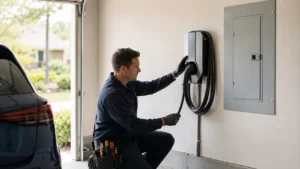
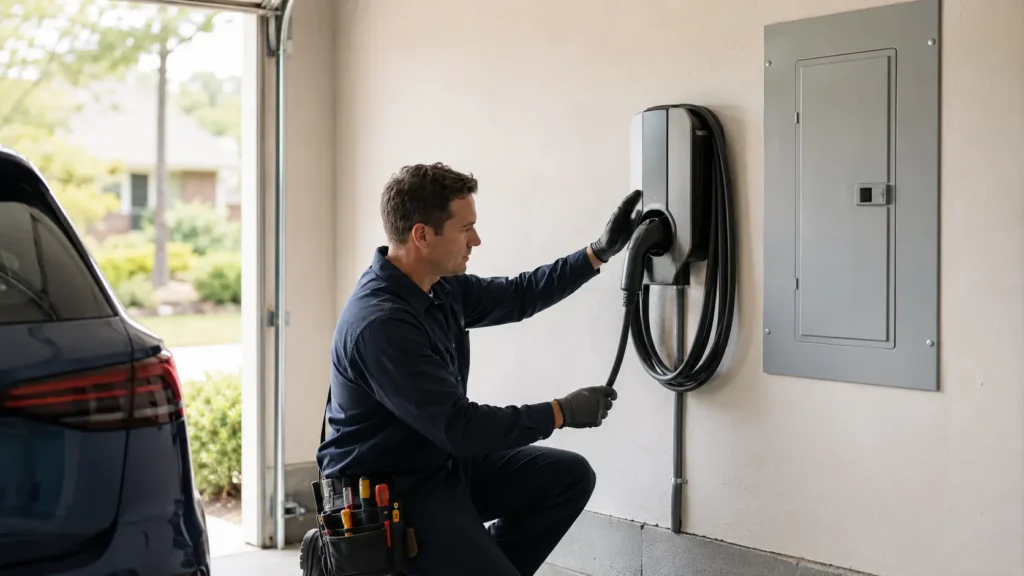
Moving from equipment selection to a safe, compliant home installation requires partnering with a licensed electrician who understands local building codes and permitting requirements. A professional assessment protects your home infrastructure, ensures your breaker sizing matches your chosen charging unit, and keeps manufacturer warranty protections intact.
Before scheduling your installation date, confirm that your chosen unit matches your parking orientation, garage layout, and electrical specifications. Review the required wall space, verify that your breaker panel has the necessary physical headroom, and double-check whether your municipality requires a specific electrical permit for 240-volt home charging circuits.
For further reference, see Alternative Fuels Data Center home EV charging guidance.
Frequently asked questions
Before ordering your home charging equipment, verify your vehicle acceptance rate, check your electrical panel headroom, and consult a licensed electrician to review local permitting rules and installation requirements.
What matters most when evaluating level 2 ev charger?
Your home electrical panel capacity and vehicle onboard charger limit are the two most critical factors. A high-amperage unit provides no benefit if your service panel cannot support the continuous load or if your vehicle maxes out at a lower acceptance rate.
What can change the answer for level 2 ev charger?
Existing garage infrastructure heavily influences your choice. If you already have a verified 240v outlet like a NEMA 14-50 receptacle, a plug-in unit avoids the cost of fresh hardwired runs, provided your breaker and wiring match the required amperage.
What should you verify before making a decision about level 2 ev charger?
Confirm your main breaker service rating, physical panel slot availability, vehicle connector standard, and local municipal permit requirements with a licensed electrician before buying installation hardware.