Can You Use a Dryer Outlet for EV Charging?
Learn about can you use a dryer outlet for ev charging, U.S. compatibility, setup, safety and the checks to make before choosing EV charging equipment.
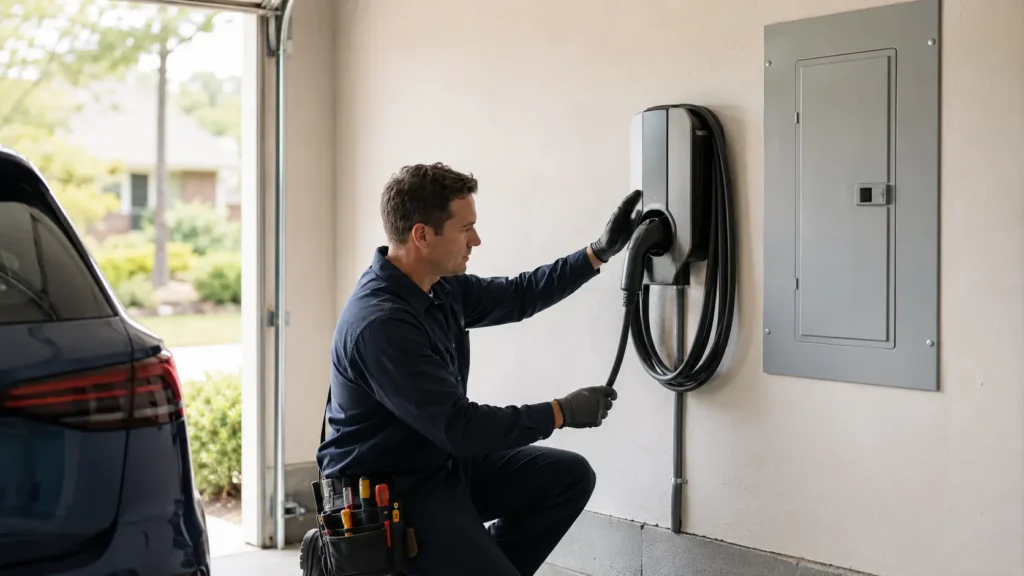
You can use a dryer outlet for EV charging only if the receptacle configuration matches, the circuit capacity is correctly managed, and the wiring and hardware are verified to handle continuous thermal loads. While plugging into an existing 240-volt laundry receptacle saves the upfront cost of running a new dedicated circuit from your main electrical panel, it requires careful inspection of your physical outlet, breaker rating, and charging amperage settings.
Understanding whether your setup is viable involves assessing outlet types, circuit ratings, continuous load limits, and potential adapter risks. This guide breaks down the technical factors, hardware limitations, and safety thresholds you must evaluate before attempting to charge your electric vehicle from a household laundry circuit.
Outlet identification
You cannot plug an electric vehicle charger into just any heavy-duty wall socket in your laundry room without checking its exact physical configuration first. U.S. homes typically feature two different types of 240-volt receptacles in laundry areas, and mixing them up creates immediate safety hazards or equipment damage. Look closely at the slot arrangement on your wall plate before you even consider buying an EV adapter or charging cable.
Older homes built before the mid-1990s usually feature a three-slot receptacle known as a NEMA 10-30. This design carries two hot wires and one neutral wire, but it completely lacks a dedicated equipment grounding wire. Modern Level 2 electric vehicle supply equipment requires a functional ground wire to safely route fault currents away from the vehicle chassis. Plugging an EV charger into an ungrounded NEMA 10-30 outlet exposes you to severe shock risks.
Newer construction relies on the four-slot NEMA 14-30 receptacle. This configuration includes two hot wires, a neutral wire, and a dedicated safety ground wire. If your laundry space has a four-slot NEMA 14-30 outlet, the physical circuit wiring has the baseline infrastructure required for grounded 240-volt appliance use. Never attempt to force a four-prong plug into a three-prong receptacle using unapproved mechanical modifications or makeshift hardware.
Circuit rating
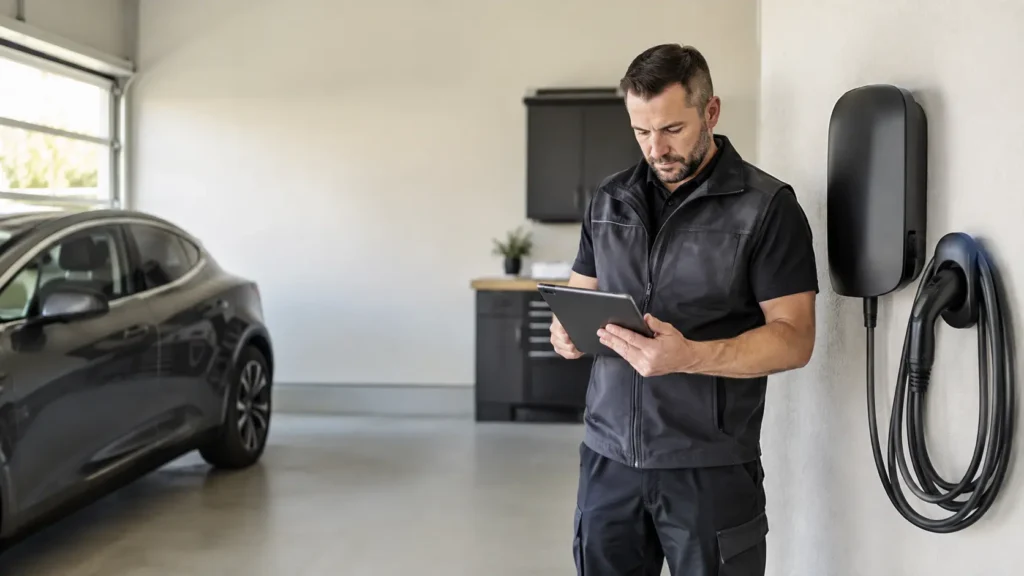
Beyond the physical shape of the receptacle, you must verify the exact electrical amperage rating of the circuit breaker protecting that line. Standard household dryer circuits in the United States are almost universally rated for 30 amps. This rating dictates the maximum electrical flow the circuit can safely handle under standard operating conditions according to the National Electrical Code.
Electrical code rules dictate that standard branch circuits supplying fixed fastened-in-place equipment must match specific load calculations. A 30-amp circuit breaker paired with 10-gauge copper wiring forms the backbone of a standard residential dryer line. While 30 amps sounds like plenty of capacity for home charging, electric vehicle loads behave differently than standard resistive heating appliances like clothes dryers or electric ranges.
Matching your EV charging equipment to a 30-amp circuit requires looking at the maximum output draw of the charger itself. Safety standards mandate that continuous loads cannot exceed eighty percent of a circuit's rated capacity. On a 30-amp dryer circuit, that eighty percent rule limits your maximum allowable continuous draw to 24 amps. Setting an adjustable charger higher than 24 amps on a 30-amp breaker will cause the protective breaker to trip repeatedly or overheat the building wire over time.
Continuous load
Plugging an electric vehicle into a dryer circuit introduces a heavy demand that standard household appliances rarely place on wiring for extended periods. Under the National Electrical Code, EV charging is classified as a continuous load because it draws maximum current for three hours or longer. When you pull power continuously, heat builds up steadily within both the building wires and the receptacle contacts.
Because a standard laundry circuit is capped at 30 amps, applying the 80 percent continuous load rule restricts your maximum safe charging draw to 24 amps. If your EV charger attempts to draw the full 30 amps through a standard residential dryer circuit, the prolonged thermal stress will degrade the wiring insulation over time. This sustained heat generation is the primary reason why attempting to use an existing 30-amp outlet without adjusting your EV's onboard charging limit or installing specialized lower-amp equipment often leads to melted faceplates, scorched wire terminals, or tripped breakers.
Outlet condition
The physical age and wear level of your laundry room receptacle matter just as much as its electrical rating. Most residential dryer outlets installed decades ago were manufactured with cheap spring contacts designed to handle the intermittent cycling of an electric heating element rather than the sustained, high-amperage draw of a modern vehicle battery.
Before considering any connection, inspect the physical state of the receptacle housing and the metal blades inside the slots. If you notice discoloration around the plastic faceplate, soot marks, or loose tension when a plug is inserted, the internal spring mechanism has likely lost its grip. Loose connections create electrical resistance, and resistance creates localized heat under load. An aged or heat-damaged receptacle cannot safely sustain the prolonged thermal demands of EV charging, and plugging into a compromised outlet dramatically increases the risk of thermal failure or electrical fire.
Sharing devices
Plugging an electric vehicle into a laundry circuit often leads homeowners to look at automated splitter switches or manual plug-sharing devices. These accessories allow a clothes dryer and an EV charger to occupy the same physical wall receptacle without requiring a second home run back to the electrical panel. While convenience drives interest in these hardware units, they introduce distinct operational dependencies.
Automatic switching splitters monitor current flow and prioritize the dryer. If your dryer starts a cycle, the switch cuts power to the EV charger temporarily, then resumes vehicle charging once the laundry cycle finishes. Manual splitters require you to remember to flip a physical toggle before running appliances.
Relying on shared-circuit hardware requires trusting mechanical relays and smart circuitry to manage power safely under high thermal loads. If a switching relay fails in the closed position, or if control logic glitches while both loads pull current, the combined demand will instantly exceed the 30-amp limit of the circuit breaker.
Adapter risks
When an electric vehicle portable charging cord comes with a NEMA 14-50 plug meant for high-capacity 50-amp outlets, connecting it to a home laundry receptacle requires a physical adapter. Fabricating custom pigtails or buying generic third-party adapter cords introduces major safety hazards. Standard consumer-grade adapters often lack the internal thermal sensing required to detect high-resistance faults, and many force a NEMA 14-50 EV cord to draw more current than a 30-amp circuit can safely handle.
EV charging software typically reads the plug configuration or expects manual amperage configuration in the vehicle menu. If an adapter lets a 32-amp or 40-amp mobile connector plug into a 30-amp laundry outlet without reducing the vehicle charging draw, the breaker will trip repeatedly, or worse, wiring insulation will overheat before the breaker trips. Even when an adapter is rated for the correct amperage drop, every connection point adds electrical resistance. Added resistance concentrates heat right at the wall interface, melting plastics and charring prongs long before household protection devices register a fault.
For further reference, see NHTSA electric and hybrid vehicle safety guidance.
Electrician Gate
Knowing when to stop independent inspection and call a licensed professional is the most effective safety measure you can take with an existing home circuit. Educational guides, outlet checklists, and video tutorials cannot replace physical diagnostic tools or professional code compliance checks. If your visual inspection reveals scorched plastic, cracked faceplates, or a three-slot NEMA 10-30 receptacle lacking a dedicated equipment grounding conductor, do not attempt a workaround.
A qualified U.S. electrician brings specialized diagnostic equipment and code expertise to your installation site. They can measure exact wire gauge behind the drywall, inspect terminal torque inside the junction box, verify breaker sizing at the main electrical panel, and test continuity to earth ground. More importantly, a licensed professional assumes liability for confirming whether your existing home electrical service can safely sustain the added demand of daily vehicle charging.
Professional evaluation becomes mandatory if you plan to hardwire an EV supply equipment unit, install a new dedicated high-amperage circuit, or replace an aged receptacle with a heavy-duty industrial-grade alternative designed to withstand sustained thermal stress. Attempting to bypass professional oversight to save time or upfront expense introduces severe risks of structural fire, equipment failure, and voided homeowner insurance policies.
Frequently asked questions
What matters most when evaluating can you use a dryer outlet for ev charging?
The physical outlet configuration and the continuous electrical rating matter most. You must verify whether your laundry room has a three-slot NEMA 10-30 or a four-slot NEMA 14-30 receptacle, and ensure your charger is set to draw no more than 24 amps to respect the 80 percent continuous load rule on a 30-amp circuit.
What can change the answer for can you use a dryer outlet for ev charging?
Wiring age, breaker health, and the presence of a dedicated safety ground wire change the answer entirely. If your outlet lacks a ground wire, shows signs of thermal degradation, or shares its circuit with other heavy appliances without automated management, direct charging becomes unsafe.
What should you verify before making a decision about can you use a dryer outlet for ev charging?
You should inspect the receptacle contact tension, confirm the wire gauge inside the wall box, check the main breaker rating, and consult a licensed U.S. electrician to test continuity and code compliance before plugging in any high-amperage vehicle connector.
Evaluating an existing laundry receptacle for vehicle charging requires balancing convenience against strict electrical safety limits. Always confirm your outlet type, configure your mobile connector to match the 24-amp continuous load maximum for a 30-amp circuit, and consult a licensed U.S. electrician if you encounter worn wiring, missing grounds, or unverified hardware.