Can Your Electrical Panel Support an EV Charger?
Get safe, practical guidance for evaluating whether your electrical panel can support a Level 2 EV charger, covering service sizes, load calculations, and warning signs.
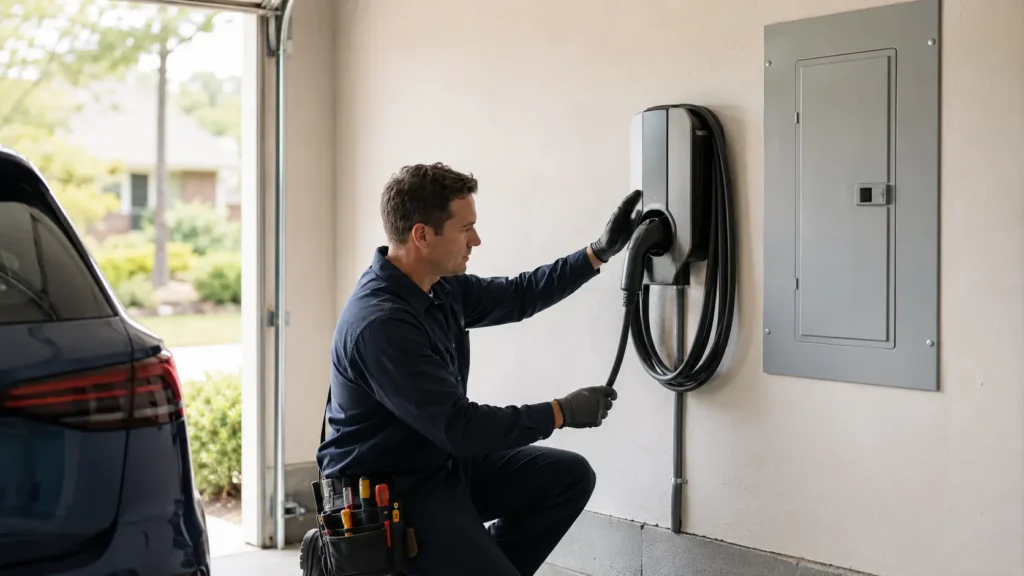
Evaluating whether your home can support a Level 2 electric vehicle charger comes down to matching your existing electrical service capacity against the continuous power demand of high-draw equipment. Many homeowners assume that if an open slot exists inside the breaker box, a new charger can be installed immediately. In practice, electrical panels operate under strict thermal and regulatory limits that govern total household energy consumption.
This guide explains how to determine your service capacity, interpret National Electrical Code continuous load requirements, recognize critical warning signs of an overloaded panel, and prepare for a qualified electrical contractor visit without risking safety or code compliance.
Service size
Your electrical service size is the baseline metric that determines whether your home can support a Level 2 electric vehicle charger without major alterations. In most residential settings, the service size is indicated by the main breaker rating located at the top of your breaker box, typically reading 100 amperes, 150 amperes, or 200 amperes. If your home operates on a 100-amp service, adding a continuous 40-amp or 48-amp EV charging load often exceeds the safe capacity limits defined by the National Electrical Code.
Many homes built before the 1980s feature 100-amp panels that were designed before modern central air conditioning, electric ranges, tankless water heaters, and home offices added cumulative electrical demand. A 200-amp service has become the modern standard for new construction because it provides the headroom required for high-draw appliances and vehicle charging simultaneously. If you find a 60-amp or 200-amp split bus panel without a single main breaker, you face an older configuration that requires professional evaluation before any high-amperage circuit is tied into the busbars.

existing load
Service size alone does not tell the full story because your panel is likely already servicing multiple heavy-draw appliances throughout the day. To determine if your electrical panel for an EV charger has spare capacity, a qualified electrician performs a standard NEC load calculation. This calculation accounts for the square footage of your home, lighting loads, fixed appliance nameplate ratings, and heating or cooling equipment to establish your total existing electrical demand.
Many homeowners assume that if their main breaker has physical empty slots, the panel has electrical capacity. Physical space on the breaker busbars is entirely separate from electrical capacity. A 200-amp panel packed with breakers running near its maximum thermal limit cannot safely accept a dedicated 50-amp continuous circuit for an EV charger, even if there is room to snap in a new breaker. Conversely, a home with gas heat, a gas stove, and gas water heating might have substantial remaining electrical capacity on a smaller service because its baseline loads are remarkably low.
charger current
Level 2 electric vehicle supply equipment does not operate as a single fixed wattage. Charging speeds range from 16 amps to 80 amps, and matching that current draw to your home electrical system requires understanding continuous load rules under the National Electrical Code. Because vehicle charging runs continuously for hours, the electrical circuit must be rated for 125 percent of the charger maximum output. A 40-amp charger, for example, demands a dedicated 50-amp breaker and heavy-gauge copper wiring to prevent overheating.
Choosing the correct amperage depends on your daily driving mileage and the time window you have for overnight replenishment. Most residential installations feature either 32-amp or 40-amp hardwired or plug-in units. A 32-amp charger delivers roughly 7.7 kilowatts of power, adding about 25 to 30 miles of range per hour of charging. Stepping up to a 48-amp charger requires a 60-amp circuit and pushes delivery past 11 kilowatts, which speeds up turnaround time for larger battery packs but demands significantly more capacity from your distribution board.
load management
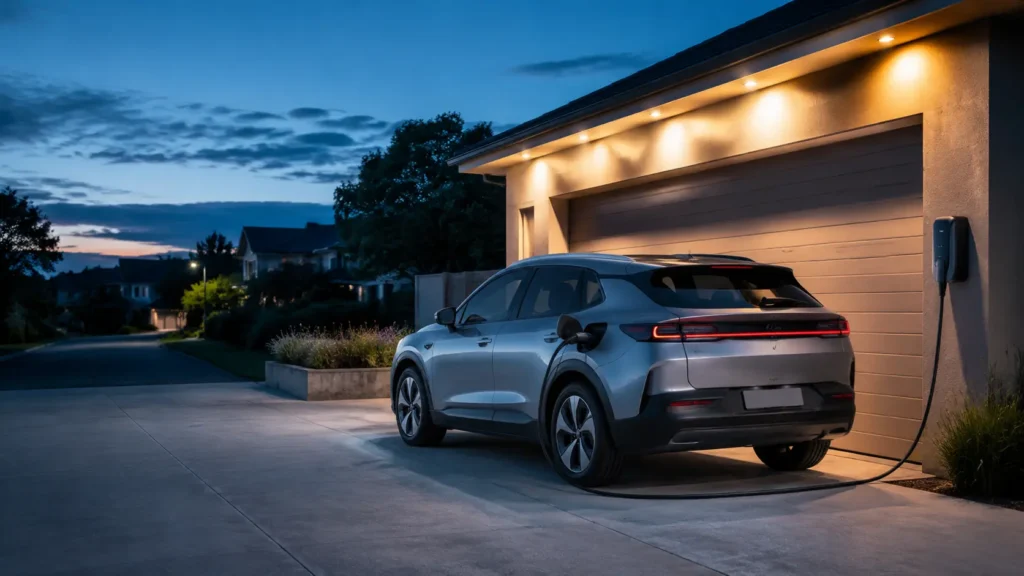
Smart load management systems provide a practical workaround when your home electrical capacity cannot support adding a large continuous draw without a costly service upgrade. Instead of pulling power directly from the main service lines at full throttle, an automated load management device monitors total household electrical consumption in real time.
When appliances like your electric range, dryer, or heat pump cycle on, the smart controller temporarily throttles the charging current downward to keep total demand safely beneath your panel rating. Once household usage drops, the system ramps the charger back up to its normal operating current.
Hardware-based energy management systems and dynamic software monitoring offer two distinct approaches to protecting your infrastructure. Hard-wired sensor clamps attach directly to your main service feeds, reacting within seconds to prevent main breaker trips. Other configurations integrate with smart home hubs or communicate directly with compatible chargers. Implementing these controls allows you to install a faster Level 2 charger on a constrained subpanel or a legacy 100-amp service without triggering expensive utility service upgrades or transformer replacements.
warning signs
Your electrical panel will often give physical clues when it is operating near or past its safe capacity. Recognizing these warning signs early helps you avoid tripped breakers, melted wiring, or more serious electrical hazards before you plug in a high-draw device like an EV charger.
The most common indicator of an overburdened system is frequent breaker tripping. While a breaker is designed to trip when a circuit draws too much current, a main breaker or a heavily loaded sub-panel tripping repeatedly under normal household use means your baseline demand is already pushing your service limits.
Physical anomalies inside or around the panel require immediate professional attention. Look for discoloration, scorch marks, or soot stains around circuit breakers or the main service disconnect. These stains indicate loose connections, sustained overcurrent conditions, or localized overheating that can degrade wire insulation.
Unusual sensory feedback is another clear red flag. A faint humming, buzzing, or crackling sound coming from inside the metal enclosure points to loose wiring terminals or an overloaded busbar arcing under load. Similarly, if the metal cover of your electrical panel feels warm or hot to the touch, current is flowing through undersized or failing components.
Older homes frequently feature legacy equipment that lacks the structural integrity or safety mechanisms required for modern continuous loads. Fuse boxes, split-bus panels without a single main shutoff, and older brands known for failing busbar connections should be evaluated and replaced by a licensed electrician before attempting to add heavy continuous loads.
electrician quote checklist
Hiring a licensed professional to evaluate your infrastructure requires asking the right questions to avoid unexpected expenses or code violations. A thorough contractor should never provide a firm quote over the phone without visiting your property to perform a physical inspection. Use this checklist when reviewing proposals to ensure every critical element of the installation is addressed.
First, verify that the contractor intends to perform a formal demand calculation based on National Electrical Code standards rather than merely glancing at your main breaker size. Ask specifically how they plan to account for existing major appliances, heating systems, and future energy needs. A proper evaluation determines whether your service drop and meter socket can handle the new demand.
For further reference, see NHTSA electric and hybrid vehicle safety guidance.
Second, review the hardware specifications included in the line-item estimate. Confirm whether you are receiving a hardwired charger installation or a NEMA receptacle setup, and check that the wire gauge, conduit type, and circuit breaker ratings match your specific unit requirements. If a smart load-sharing device is proposed, ensure the model is compatible with your panel and supported by local utility rules.
Third, clarify the permit and inspection responsibilities. Reputable electricians pull the required municipal permits and schedule the mandatory final inspection. Clarify who absorbs the cost if the local inspector mandates panel labeling corrections or additional bonding and grounding updates.
- Detailed NEC load calculation breakdown rather than a flat estimate
- Explicit listing of breaker size, wire gauge, and conduit run length
- Permit acquisition and municipal inspection fees included in writing
- Warranty terms covering both contractor labor and installed hardware
Comparing multiple bids becomes straightforward when each contractor answers these operational criteria. If a proposal lacks this level of detail, request clarification before signing any service agreement.
Frequently asked questions
What matters most when evaluating electrical panel for ev charger?
The single most important factor is your home total electrical capacity measured against current household demand, rather than simply counting physical breaker spaces. A formal National Electrical Code load calculation must account for continuous appliances, square footage, heating, and cooling before dedicating amps to vehicle charging.
What can change the answer for electrical panel for ev charger?
Your current service size, such as whether you have a 100-amp or 200-amp main breaker, sets the baseline. However, smart load management systems, gas versus electric household appliances, and the specific amperage draw of the charger can change whether your existing infrastructure requires an upgrade or can safely support the new load.
What should you verify before making a decision about electrical panel for ev charger?
Before purchasing hardware or signing an installation agreement, verify your current main breaker rating, check for physical warning signs like warm panel covers or buzzing noises, and secure multiple detailed contractor quotes that explicitly outline NEC calculations, wire gauges, and permit responsibilities.
Review your panel rating and observe daily household power usage before contacting a licensed electrical contractor for a physical inspection and formal load calculation.