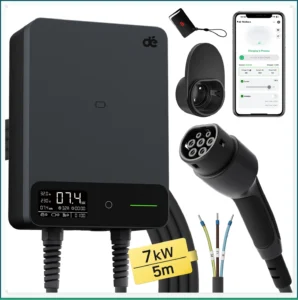
EV Charger Product Finder
Use our interactive ev charger finder to evaluate your vehicle limits, electrical setup, and daily driving needs for a transparent hardware match.

Interactive tool
Verified product finder
Results use deterministic rules and the verified data version shown below. Confirm vehicle and electrical requirements with the manufacturer and a licensed electrician.
Data version: 2026-08-09
Finding the right electric vehicle equipment starts with matching your car's actual charging capacity against your home electrical panel and daily driving routine. This interactive guide acts as an ev charger finder to help you sort through amperage limits, circuit requirements, and installation styles without guesswork.
You can use the decision framework below to understand how each input affects your hardware options. Whether you are looking for the best ev charger for my car or trying to answer which ev charger should i buy, walking through vehicle limits, circuit availability, and budget constraints ensures you select a safe, compatible setup.
Vehicle
Your vehicle model sets the boundary for every hardware choice you make. Different cars carry different onboard charger limits, which dictate the maximum alternating current your setup can actually pull from the wall. For instance, a vehicle with an 11 kW onboard charger will accept power faster than one capped at 7.7 kW, provided your supply circuit matches that output. Knowing your specific EV model prevents you from spending money on amperage levels your charge port cannot accept.
Connector type is another baseline detail determined entirely by your vehicle. If you drive a battery-electric model utilizing a North American Charging System inlet versus a J1772 port, your hardware choice or adapter requirement changes immediately. Identifying your vehicle configuration first keeps you from buying mismatched cables or incompatible docking stations.
Parking
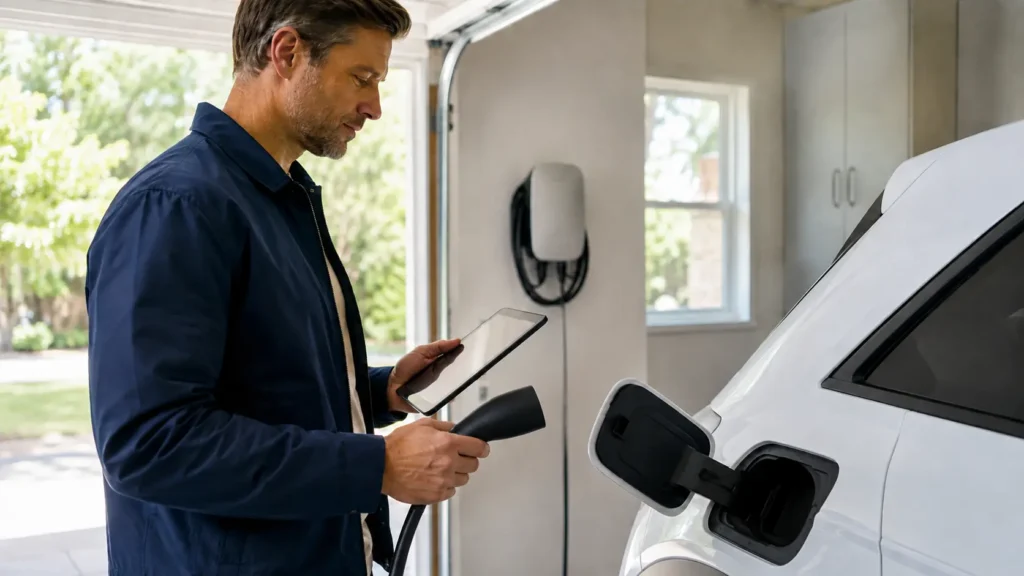
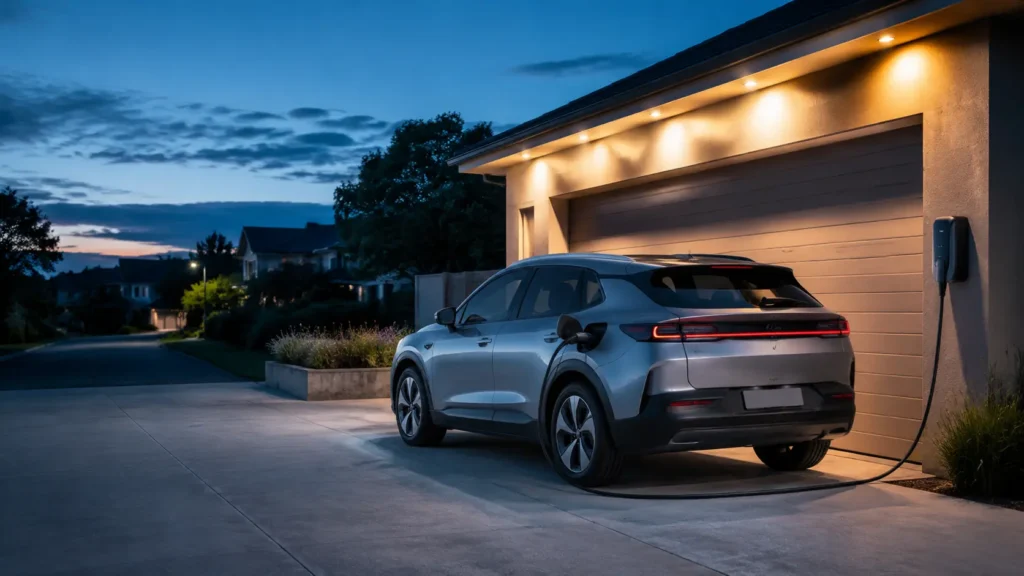
Where your vehicle sits overnight directly dictates whether you need hardwired wall units or flexible cordsets. Indoor garage parking offers protection from extreme weather, letting you mount compact units directly to drywall or studs near your parking stall. Outdoor driveway or open carport parking demands hardware rated for direct exposure to rain, snow, and severe temperature fluctuations, usually indicated by robust enclosure ratings.
Cable reach also depends heavily on your parking angle. If your charging port sits at the front bumper but you usually reverse into your stall, or if you park two vehicles in a shared garage, standard cable lengths can fall short. Measuring the distance from your intended mounting point to your vehicle charge port helps you decide if a 20-foot or 25-foot cable is necessary to avoid tension on the connector.
How Your Daily Driving Changes the Answer
Your typical driving routine dictates how fast your battery needs to replenish overnight. Commuting twenty miles each day requires very little recovery time, meaning even baseline charging speeds easily restore full battery range during normal sleeping hours. High-mileage drivers covering eighty or more miles daily need much higher power delivery to ensure the battery reaches full capacity before the next morning departure.
Translating daily mileage into kilowatt-hours helps clarify your hardware requirements without guesswork. A vehicle averaging three to four miles per kilowatt-hour needs enough sustained power delivery during your resting window to cover your commute with a safe buffer. Matching your daily driving habits to your charging capability ensures you never wake up to an unfinished charge cycle.
Check Your Outlet and Circuit
Your home electrical panel and existing outlet infrastructure dictate how fast you can charge without costly electrical upgrades. If you have an empty slot in your breaker panel, a hardwired installation allows an electrician to supply the maximum amperage your vehicle or charger supports, usually 48 amps on a 60-amp breaker or 40 amps on a 50-amp breaker.
When you rely on an existing 240-volt receptacle such as a NEMA 14-50 or NEMA 6-50, your charging speed is safely capped by the circuit capacity and the physical receptacle rating. Standard 120-volt wall outlets provide trickle charging, which restores only a few miles of range per hour, making 240-volt solutions necessary for most daily commuters.
portability
Deciding between a fixed wall-mounted unit and a portable charging cord depends on whether your vehicle needs juice only at home or travels with you on road trips. Hardwired and plug-in wall units stay mounted in your garage or driveway, offering robust weather resistance and heavy-duty cables designed for daily plugging and unplugging.
Portable EV chargers give you the flexibility to pack the unit in your trunk for travel, allowing you to plug into standard household outlets or 240-volt RV park receptacles when away from home. Keep in mind that portable units often require heavy adapter cables and lack the rugged mounting brackets built for permanent outdoor exposure.
smart features
Wi-Fi connectivity, smartphone applications, and energy monitoring transform a basic charger into an intelligent energy management tool. Smart chargers let you schedule charging sessions during off-peak utility hours when electricity rates are lowest, track kilowatt-hour consumption, and lock the unit remotely to prevent unauthorized use in shared or open-air parking areas.
Non-smart, or dumb chargers, simply deliver power as soon as you plug in without tracking or scheduling options. If your electric utility offers time-of-use rebates or variable pricing structures, a smart charger pays for itself over time by automating when your car draws power.
Budget
Equipment purchase price is only part of the total investment when selecting charging hardware. You also need to factor in installation labor, permitting fees, and potential electrical panel upgrades if your current service cannot handle a continuous 40-amp or 48-amp load. Basic plug-in units typically cost less upfront and require minimal installation expense if a suitable 240-volt receptacle is already in place. Hardwired models may involve higher initial electrician fees but eliminate the cost of buying a heavy-duty industrial outlet and GFCI breaker.
Balance your upfront equipment spend against long-term operational savings. A smart unit with utility integration lets you schedule charging sessions during off-peak hours when electricity rates are lowest. Over a year of daily commuting, these utility savings often offset the higher initial price of a connected charger.
Ranked Verified Products
Our recommendation engine evaluates your inputs against verified hardware profiles to surface viable units without promotional bias. Each suggestion is scored based on how closely its amperage output, cable length, enclosure rating, and connector type match your vehicle and electrical constraints. If your inputs indicate a 50-amp breaker, the tool filters out options that exceed safe continuous load limits while prioritizing units that maximize your available circuit capacity.
For further reference, see EPA plug-in electric vehicle charging basics.
When reviewing ranked suggestions, check the compatibility notes for your specific car model. Even if a charger supports high output, your vehicle onboard charger determines the actual speed at which energy flows into the battery pack.
Why Matched
Every match displayed by the finder includes a transparent breakdown explaining why that specific hardware fits your profile. The tool traces its logic directly back to your answers, showing how your daily driving distance, parking location, and electrical panel limits led to that recommendation. For example, if you specified outdoor parking and a 40-amp circuit, the matched result highlights its NEMA-rated weather enclosure and 40-amp output configuration.
This traceability ensures you understand the trade-offs behind each suggestion. You can immediately see whether a recommended unit prioritizes raw speed, travel flexibility, or smart scheduling so you can make a confident purchase decision.

Frequently asked questions
Review your vehicle specifications and electrician assessment before locking in your charging equipment purchase. A well-matched home setup keeps your daily commute covered safely and efficiently.
What matters most when evaluating ev charger finder?
Your vehicle onboard charger limit and home electrical panel capacity matter most. If your car only accepts 7.7 kW or 11 kW AC charging, or if your breaker panel only has room for a 40-amp circuit rather than a 60-amp circuit, those physical constraints immediately narrow your viable hardware choices.
What can change the answer for ev charger finder?
Changes in your parking situation or daily commute can alter your ideal hardware configuration. Moving from a garage to outdoor driveway parking introduces weatherproofing requirements, while a longer daily commute increases your nightly energy recovery needs, often favoring faster hardwired units over slower plug-in alternatives.
What should you verify before making a decision about ev charger finder?
You should always verify your local electrical code requirements, permit rules, and electrician availability before purchasing hardware. Confirming whether your utility offers time-of-use rebates can also determine if a smart Wi-Fi connected charger pays for itself over time.