EV Charger Compatibility Checker
Use our interactive ev charger compatibility checker to evaluate your vehicle's physical inlet, onboard AC limit, and home electrical circuit before choosing home charging equipment.
Interactive tool
EV charger compatibility checker
Results use deterministic rules and the verified data version shown below. Confirm vehicle and electrical requirements with the manufacturer and a licensed electrician.
Data version: 2026-08-09
Finding out which ev charger fits my car requires matching your exact vehicle specifications with your home electrical service. This interactive ev charger compatibility checker guides you through your vehicle year, make, model, and trim, your physical charging inlet, your onboard AC charging limits, and your home electrical panel capacity.
Instead of guessing home charger compatibility from generalized charts, this page explains how our calculation logic evaluates your inputs, how to handle edge cases like regional trim variations, and what safety checks you need to complete before purchasing equipment.
Vehicle year/make/model/trim
Finding the right home charging setup starts with identifying your exact vehicle specifications down to the trim level. Small variations in model year, battery pack options, or regional manufacturing differences can alter the physical charge port or the vehicle-side hardware limits. A base model from 2022 might support a different maximum AC feed than a performance or long range trim released the following year, even if the exterior body style looks identical on your driveway.
When you input your vehicle into an EV charger compatibility checker, the tool uses these details to filter out incompatible plugs and thermal management profiles. Always cross-reference your owner manual or door jamb sticker if you drive a recently imported or transitional model year where mid-cycle hardware updates occurred.

inlet
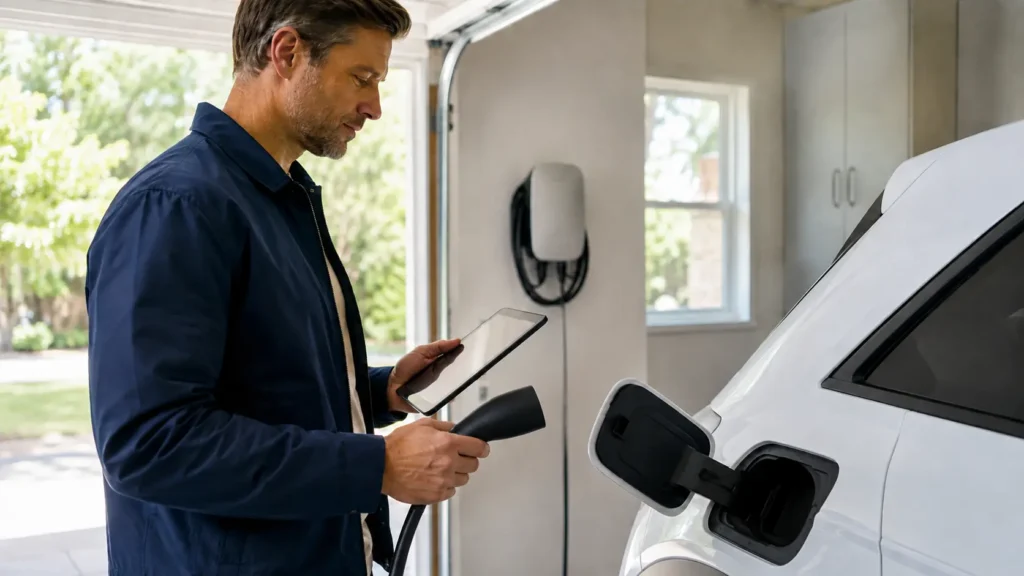
Your car's physical charge port, known as the inlet, dictates which connector plugs can mechanically dock with your vehicle. In North America, the two dominant standards are the SAE J1772 connector for Level 2 AC charging and the North American Charging Standard, or NACS, which handles both AC Level 2 and DC fast charging on newer domestic and adopted imports. Older or specialized vehicles may also feature regional or legacy connectors that require passive adapters.
Matching the inlet goes beyond simply looking at the shape of the plug. You need to verify whether your car uses a combined charging system layout or a dedicated AC port separate from your direct current pins. Selecting the correct inlet type in a compatibility tool ensures you do not purchase a tethered cable unit that requires an unrated third-party adapter for daily residential use.
onboard AC limit
Your car contains a built-in power converter known as the onboard charger. This internal component dictates how much alternating current electricity your vehicle can actually accept from a home charging station. Even if you plug your vehicle into a high-capacity Level 2 charger that can supply 48 amps or 80 amps of power, your car will only draw up to its specific engineering limit.
For example, if your EV has a maximum onboard AC charging limit of 7.7 kilowatts, which equates to 32 amps at 240 volts, buying a 48-amp hardwired charger will not speed up your replenishment time. The car simply regulates the flow to match its internal capacity. Checking this threshold prevents you from overspending on electrical supply equipment that exceeds what your vehicle can physically utilize.
home outlet/circuit
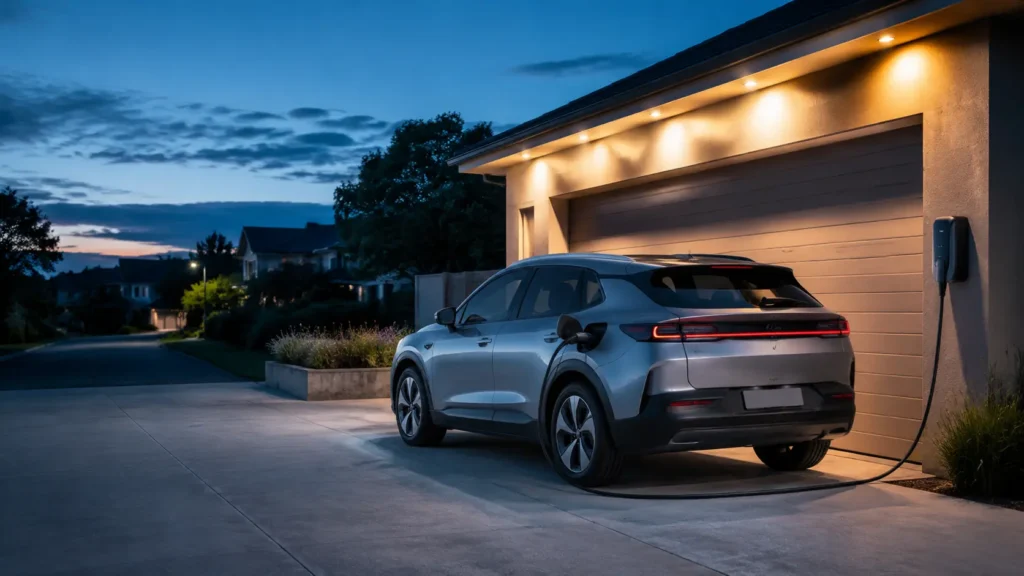
Your residence electrical infrastructure sets the real-world boundary for how fast you can replenish your battery pack at home. Before selecting any charging hardware, you need to examine your existing electrical panel capacity, available amperage headroom, and whether you plan to install a plug-in unit or a hardwired station.
A standard 120-volt household outlet provides Level 1 charging, which delivers very slow power recovery rates. Upgrading to a dedicated 240-volt circuit allows for Level 2 charging speeds, but the circuit breaker rating dictates the maximum safe continuous load. National electrical codes require continuous loads like EV chargers to run at 80 percent of the circuit breaker capacity. This means a 40-amp charger requires a dedicated 50-amp breaker and heavy-gauge wiring. Evaluating your panel amperage before purchase ensures your home can safely support the selected hardware without tripping breakers or risking thermal overload.
result confidence
Every match generated by our interactive evaluation engine carries a confidence score based on how completely your selected vehicle data and home electrical parameters match verified equipment specifications. High-confidence results mean your specific vehicle trim, physical inlet port, onboard AC limit, and home circuit capacity align perfectly with the selected charging hardware parameters. When a vehicle model undergoes a mid-generation hardware refresh or a trim introduces an optional dual-charger configuration, our verification rules flag the output as moderate confidence until you manually confirm the physical port and electrical panel capacity.
Understanding this score helps you avoid ordering equipment that exceeds your circuit capacity or fails to match your port geometry. If your result returns a conditional or moderate rating, the tool will highlight the specific variable needing physical verification, such as your home circuit breaker rating or your vehicle onboard inverter limit. Checking these physical constraints before purchasing prevents installation delays and avoids costly returns.
product matches
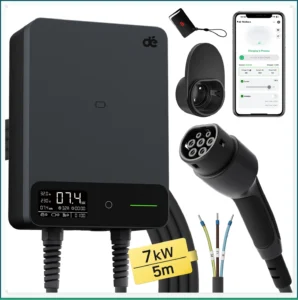
Once the interactive calculator processes your vehicle specs and home electrical limits, it filters available charging hardware to display only units that match your exact requirements. Product matches are categorized by installation type, including hardwired units for maximum amperage delivery and plug-in units utilizing standard NEMA 14-50 outlets. Each suggested product match displays its maximum continuous output amperage, cable length, connector type, and enclosure rating to help you evaluate daily usability.
Reviewing these matched options requires balancing your immediate vehicle limits against your future electrical needs. If you drive a vehicle with a 32-amp onboard AC limit today but plan to purchase a larger electric truck or SUV with a 48-amp or 80-amp onboard charger in the future, selecting a higher-amperage hardwired unit paired with a properly sized circuit breaker allows you to upgrade your charging speed later simply by swapping the vehicle. Always verify local electrical codes and consult a licensed electrician to inspect your service panel before purchasing any matched hardware.

Frequently asked questions
For further reference, see EPA plug-in electric vehicle charging basics.
Your vehicle's maximum onboard AC charging limit and your home electrical panel's available amperage are the two most critical factors. Even if you purchase a high-capacity 48-amp or 80-amp charging station, your vehicle will only draw as much alternating current as its internal inverter allows.
Mid-cycle refresh years, battery pack options, and regional manufacturing variations can alter physical charge port locations or onboard charger sizes. Additionally, the continuous load rule requires your circuit breaker to be rated at 125 percent of your continuous charging draw, which may necessitate a panel upgrade or a lower amperage setting.
You should physically inspect your electrical service panel, confirm available breaker slots, and consult a licensed electrician to verify local electrical codes. Checking whether your home uses a plug-in NEMA outlet or a hardwired connection ensures your chosen hardware matches your installation environment safely.
Review your vehicle trim, onboard AC limit, and electrical panel capacity carefully before selecting home charging hardware. When you have confirmed your electrical constraints, use the interactive tool above to generate your verified product matches and secure confidence scores for your setup.