Portable EV Charger Guide: Connectors, Outlets and Safety
Understand portable ev charger, including U.S. compatibility, setup, safety, costs and the key checks to make before choosing EV charging equipment.

A portable ev charger gives you the flexibility to recover driving range wherever a compatible electrical outlet is available, eliminating the total reliance on fixed public stations or home wall boxes. Choosing the right mobile unit requires balancing daily mileage needs, your vehicle port configuration, and the electrical capacity of your garage or travel destination.
This guide breaks down how mobile EVSE hardware operates across Level 1 and Level 2 speeds, examines the physical differences between NACS and J1772 connectors, explains NEMA wall receptacle requirements and amperage limits, and outlines essential safety certifications and travel inspection steps to protect your vehicle and home.
Definition
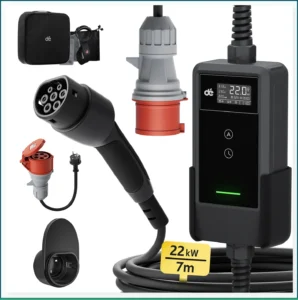
A portable electric car charger, commonly referred to as a mobile EVSE or travel EV charger, is a self-contained power supply unit that travels inside your vehicle rather than being permanently mounted to a garage wall. It plugs into standard or high-output electrical receptacles at one end and connects to your car charge port at the other. Unlike permanent wall units, a plug-in EV charger allows you to replenish your battery pack wherever you find a compatible power source, making it a flexible backup for home or road trips.
The unit itself contains an internal control box, often called the In-Cable Control and Protection Device (ICCPD), which manages the communication protocols between your house wiring and your car onboard computer. This safety brain verifies ground continuity, monitors operating temperatures, and controls current delivery before allowing electricity to flow. Understanding how this equipment functions helps you evaluate whether a mobile unit can serve as your primary charging solution or if it should remain strictly in your trunk for emergencies.

Buyer decision tree
Choosing the right mobile setup starts with evaluating your daily driving distance and the electrical access points available at your primary residence and regular destinations. If you drive fewer than forty miles a day and park near a standard household outlet, you can often rely on basic Level 1 speeds without upgrading home infrastructure. However, if your daily commute exceeds that threshold or you require rapid turnaround times between trips, you need a hardware solution capable of drawing higher voltage and amperage from a dedicated garage or workshop receptacle.
Next, examine your vehicle charging port configuration and your long-term vehicle upgrade path. Mixing older vehicle connections with newer charging standards requires careful planning regarding adapter usage and cable interchangeability. Map out your travel habits by answering these three core questions before browsing equipment options:
- Where do you primarily park and charge? Renters, apartment dwellers, and homeowners face completely different permitting and wiring constraints.
- What electrical circuits are readily accessible? Do you have existing high-voltage outlets in your garage, or will you rely on standard 120-volt household lines?
- How quickly do you need to recover range? Balance overnight recovery windows against the cost of installing new dedicated circuits.
L1/L2
Understanding charging speeds requires looking at the distinction between Level 1 and Level 2 electricity. Level 1 charging operates on standard 120-volt household current, which matches the everyday receptacles found in any garage or kitchen. Plugging a portable EVSE into this standard outlet delivers roughly one to two kilowatts of power, translating to about two to five miles of driving range restored per hour of connection. This slow rate suits drivers with minimal daily commutes or long overnight parking windows where the vehicle sits plugged in for twelve hours or more.
Level 2 charging steps up the voltage to 208 or 240 volts, drawing power from dedicated circuits similar to those used by electric dryers or large kitchen ranges. A compatible mobile unit running on Level 2 power typically delivers between three point six and nine point six kilowatts, depending on the amperage limits of the portable hardware and your vehicle onboard charger. This increase shrinks full recharging times from days or overnight trickle sessions down to four to eight hours, making Level 2 the primary choice for drivers who need faster turnaround times or travel long distances regularly.
NACS/J1772
Vehicle charge ports dictate which physical connector your mobile charger must plug into, with two primary standards dominating the United States market today. The SAE J1772 connector serves as the long-standing industry standard for nearly all non-Tesla electric vehicles, featuring a rounded paddle shape with distinct locking latches. If you drive a Ford, Chevrolet, Hyundai, Volkswagen, or most other legacy brands, your car uses a J1772 inlet for standard AC charging.
Tesla vehicles and an expanding group of newer automotive brands rely on the North American Charging Standard, commonly called NACS. The NACS plug combines AC and DC charging capabilities into a smaller, sleeker profile without the mechanical latch button found on older J1772 handles. When selecting a travel EV charger, you must match the mobile unit output cable directly to your car port design, or source an adapter that is specifically rated and tested for electrical compatibility by an independent testing laboratory.
outlet
Your wall receptacle dictates what kind of power your portable electric car charger can draw. Standard NEMA 5-15 outlets supply 120 volts and top out at 15 amps, which limits your mobile EVSE to Level 1 speeds. Upgrading your charging routine requires a dedicated 240-volt circuit paired with the correct heavy-duty receptacle. Common garage and utility options include the NEMA 14-50, which is frequently found near electric ranges or RV parking pads, and the NEMA 6-50, which is widely installed for heavy-duty welding equipment.
Before plugging a high-amperage mobile unit into any 240-volt wall socket, you must inspect the physical condition of the contacts. Loose outlet springs, corrosion, or discoloration on the plastic faceplate indicate excessive heat buildup from past high-load usage. A worn receptacle should be replaced by a licensed electrician prior to regular charging sessions. Never attempt to force a plug into an incompatible socket or modify the prongs yourself, as improper electrical mating creates severe arc-flash and fire hazards.
amperage
Amperage determines how much electrical current flows through your portable EV charger into the vehicle battery. Standard household circuits safely deliver 12 amps of continuous load on a 15-amp breaker, while dedicated 240-volt mobile units often operate at 16, 24, 32, or 40 amps. Selecting the right amperage setting requires balancing your electrical panel capacity against your vehicle maximum onboard charger limit and the continuous load rating of the circuit.
National electrical codes mandate that continuous loads like EV charging must not exceed 80 percent of the circuit breaker rating. A 40-amp portable EVSE, for example, requires a dedicated 50-amp circuit breaker and heavy-gauge copper wiring to prevent tripping or overheating over hours of continuous operation. If you are using an adjustable mobile charger, always verify that the unit manual settings match your wall outlet capacity and breaker size before initiating a charge.
certification
Safety certifications matter because a portable electric car charger handles high currents in uncontrolled environments like driveways, wet grass, and ungrounded older garages. Look for recognized testing laboratories such as UL, ETL, or CSA. These marks indicate that the unit passed rigorous thermal testing, water resistance evaluations, and drop or crush resistance protocols. Uncertified mobile chargers lack internal safeguards against ground faults, overcurrent events, and overheating at the plug face.
Inspect the control box and the cable jacket for permanent stampings or laser-etched certification labels rather than removable paper stickers. Counterfeit units often copy reputable logos without undergoing actual safety evaluations. If you plan to use an adapter or plug into varied circuits on the road, ensure every component in the charging chain carries a legitimate safety listing to protect your vehicle and your home electrical system from catastrophic failure.
For further reference, see NHTSA electric and hybrid vehicle safety guidance.
travel checklist
Packing a mobile EVSE for a road trip requires more than tossing the cable into your trunk. Before you leave, verify that your charging kit matches the physical outlet types you expect to encounter at your destination, such as standard household receptacles or higher-voltage RV park hookups. Pack only manufacturer-approved adapters that maintain proper ground continuity and temperature sensing.
Keep a physical checklist in your glove box to ensure safe deployment every time you plug in away from home:
- Inspect the plug pins for signs of pitting, blackening, or corrosion before insertion.
- Verify that the wall receptacle holds the plug firmly without sagging or slipping out.
- Check the control box indicator lights for proper grounding and fault warnings.
- Ensure the cable is laid flat without tight kinks, sharp bends, or heavy objects resting on the jacket.
- Monitor the plug face and wall plate temperature during the first thirty minutes of high-amperage charging.
If the wall plate feels hot to the touch or if the control box trips repeatedly, stop charging immediately. Environmental factors like direct summer sunlight on the control box or heavy rain pooling around the outlet demand extra vigilance when charging outdoors.
Frequently asked questions
Selecting a portable electric car charger requires careful attention to your vehicle inlet, electrical receptacle capacity, and hardware safety certifications. Take time to inspect your home wiring or travel destinations before plugging in, and never exceed the continuous 80 percent load rule on standard circuits. Review your daily driving mileage to determine whether standard Level 1 speeds suffice or if a dedicated Level 2 setup is necessary for your routine.
What matters most when evaluating portable ev charger?
The most critical factors are matching your daily driving range to the correct charging speed, verifying that your home or destination wall outlet can safely support the continuous current draw, and ensuring the hardware carries an accredited safety certification from an organization like UL, ETL, or CSA.
What can change the answer for portable ev charger?
Your electrical infrastructure is the primary variable. Upgrading from a standard 120-volt household outlet to a 240-volt dedicated circuit requires professional electrical work, proper breaker sizing, and heavy-gauge wiring to handle continuous loads safely without overheating.
What should you verify before making a decision about portable ev charger?
Always verify your vehicle port design against the mobile charger output cable, inspect wall receptacles for physical wear or loose contacts, check that your mobile unit manual matches your circuit capacity, and confirm that safety control boxes include active ground fault and thermal monitoring features.